


From urbanization to agriculture, land systems touch nearly every aspect of development. That’s why the World Bank Group has launched the Land Data Map, a new interactive platform designed to make land data more accessible, interactive, and practical.
Built for policymakers, practitioners, researchers, and communities alike, this new tool offers a fresh way to engage with land data — and demonstrates how data-driven insights can help improve development outcomes across sectors.
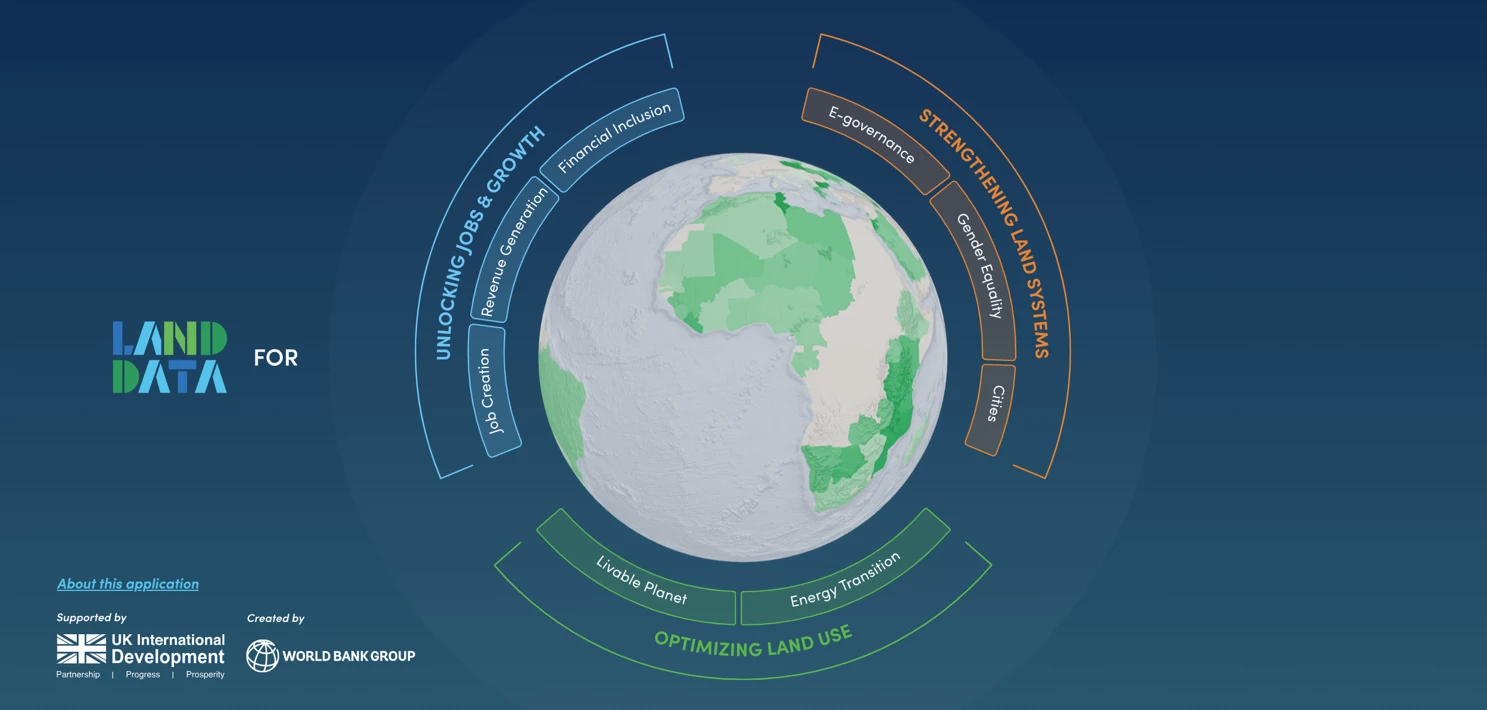
The Land Data Map features eight thematic maps that help users explore the connections between land and key development priorities such as job creation, revenue generation, urban development, and more.
Land data that tells a story
The Land Data Map combines publicly available data with compelling visuals and short narratives to explain how secure, efficient, and equitable land systems drive development. Whether optimizing land use for cities, promoting financial inclusion, or supporting the energy transition, the tool provides a starting point for exploring how land data underpins these efforts.
Each map includes development indicators and examples drawn from across the World Bank Group’s work, aligned with relevant World Bank Scorecard indicators and outcomes. The tool is powered in part by Data360, a curated platform that integrates high-quality development data from the World Bank and its partners.
By linking thematic content with spatial data, the platform helps bring abstract development concepts into focus. For example, the Job Creation map illustrates how secure land tenure and functioning land markets can unlock agricultural productivity, enable structural transformation, and create new livelihood opportunities.
Why land data matters for jobs and growth
Employment in agriculture remains a large share of total employment in many low- and middle-income countries. When farmers have secure property rights, they are more likely to invest in their land, adopt better technologies, or lease their land to others. This increases productivity and allows some households to shift into non-agricultural jobs, supporting broader economic transformation.
As outlined in the Job Creation map:
- Secure property rights are associated with 40% increases in agricultural output on average
- Efficient land rental markets can lead to productivity gains of up to 60% and welfare improvements for tenants of around 25%, based on findings from country-level analysis
- Strong land systems also support long-term economic growth, by reducing the cost of land transactions and improving market efficiency.
These dynamics are not just theoretical — they are playing out in real projects and country contexts. The Land Data Map provides a way to visualize and explore these linkages, helping users connect the dots between data, decisions, and development.
Celebrating the global land community
The Land Data Map was previewed at the 2025 World Bank Land Conference, the world’s leading forum on land policy and practice. This year’s event brought together over 800 participants in person from nearly 100 countries, with thousands more joining online.
The conference offers a unique space for practitioners, policymakers, researchers, and civil society to share knowledge, debate ideas, and collaborate on solutions to complex land challenges. From tenure security to land administration reform, climate resilience to gender equity, this year’s discussions reaffirmed the central role of land systems in accelerating job creation and economic growth.
The United Kingdom, a long-standing partner in the land sector, was a Champion Sponsor of the 2025 conference. With support from UK International Development, the Land Data Map was developed to meet growing demand for better land data tools and to support country-led reforms.
Moving from data to action
The Land Data Map is not a static product. It is an interactive platform meant to evolve with the needs of users and the availability of new data. In the months ahead, we hope to update the tool based on user feedback and to deepen its connections with World Bank operations and research.
Making land data more accessible and useful is an important step toward better land governance. When policymakers and communities have the tools they need to understand and act on land-related challenges, the path toward more inclusive, efficient, and climate-smart land systems becomes clearer.
We invite you to explore the World Bank Land Data Map and share your insights with us. Together, we can use data not just to describe problems — but to solve them.
Source : World Bank