
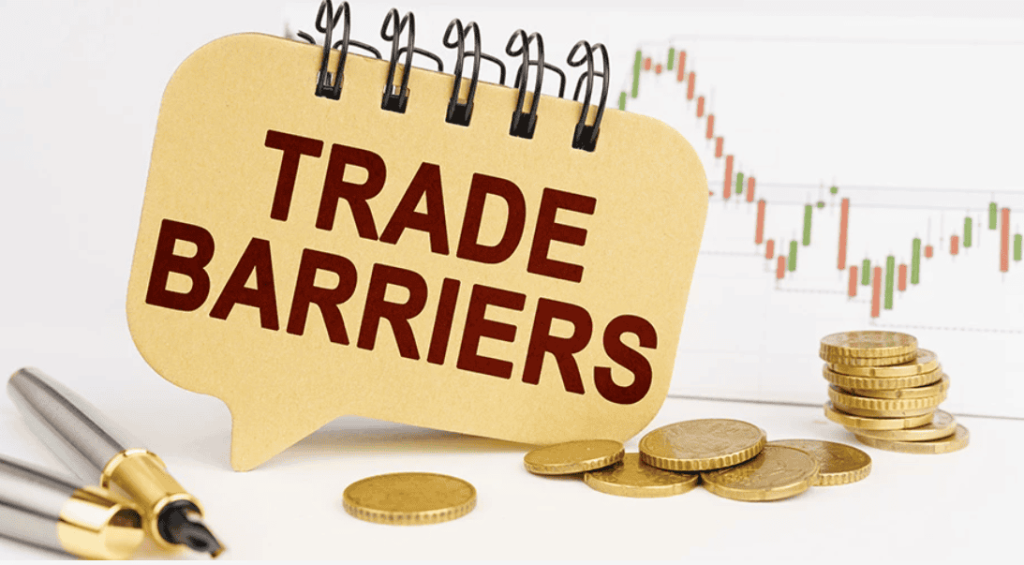
For decades, global trade debates have centered on tariffs – the duties countries impose on imported goods. Today, a new, more complicated set of trade barriers has emerged: Non-Tariff Measures (NTMs). Our new paper analyzes this trend, revealing how NTMs have grown in influence, becoming equal to, if not more influential than tariffs in shaping market access and global trade.
Increasing Prominence and Complexity of NTMs
Unlike tariffs, NTMs encompass many kinds of regulations, standards, and procedures – from food safety rules and product certifications to licensing requirements and export bans. Many NTMs serve legitimate public policy goals, such as protecting health, safety, or the environment. Yet their design and implementation can inadvertently create significant barriers to trade.
Understanding Trade Barriers
To understand and compare trade barriers around the world, we brought together information on NTMs, tariffs, and imports for thousands of products and countries. To make sense of how NTMs affect trade, we calculated the “ad valorem equivalent” (AVE) of NTMs – expressing their impact as if they were tariffs – making results directly comparable. This helped us create a clear, globally consistent dataset showing how restrictive NTMs really are, providing clearer insights for policymakers and filling a gap in understanding modern trade barriers. The analysis uncovers several important findings:
- Although tariffs have declined over the past 25 years, the frequency and restrictiveness of NTMs have surged, particularly in high-income countries.
- Both tariffs and NTMs are higher in LMICs than in HICs, but high-income countries rely more heavily on NTMs relative to tariffs. Meanwhile low- and middle-income countries face steeper AVEs on their exports.
- NTMs disproportionately affect smaller firms, leading to market exit and concentration. This is particularly true for behind-the-border measures that increase fixed compliance costs.
- NTMs can lead to a sorting of countries and firms into or out of markets based on their compliance capacity and product mix, creating a divide between developed and developing economies.
- Simple averages of NTM restrictiveness – meaning the average level of restrictiveness is calculated by giving equal weight to each product or sector, no matter how much is actually imported – can mask significant differences from import-weighted averages, highlighting how differences in countries’ import and export composition influences the perceived impact of NTMs.
Figure 1: Tariffs vs NTMs, 1996–2022
While tariffs declined steadily, the frequency of NTMs has surged.

Note: CVDs denote countervailing duties, AD denotes anti-dumping, SPS denotes sanitary and phytosanitary measures, and TBT denotes technical barriers to trade measures.
Source: Authors’ calculation using data from Kee and Xie (2024) and Zavala et al. (2023)
Nuancing Trade Policy
These findings move the conversation beyond tariffs and help in understanding how NTMs contribute to trade fragmentation. As NTMs increasingly shape market access in today’s complex global economy, it becomes clear that understanding them is a first step to managing them.
Considerations for developing-country policymakers interested in better monitoring NTMs
- Invest in infrastructure and capacity: Building the infrastructure needed to raise quality, strengthening testing facilities, and improving certification processes are essential to help domestic firms assess and meet NTM requirements and reduce exclusion from regulated markets.
- Integrate NTMs into trade diagnostics: NTMs and their AVEs must be systematically integrated into trade diagnostics and market access assessments to fully understand trade restrictiveness.
- Beware of poorly designed measures: NTMs imposed in isolation, without complementary policies and careful design, can backfire, leading to welfare losses and governance challenges.
- Enhance transparency and accountability: Advocating for stronger WTO notifications, clearer provisions in trade agreements, and more systematic monitoring can help reduce the opacity of NTMs and enhance predictability.
In conclusion, our paper shows that these trade barriers are often hard to see, difficult to monitor, and can be applied in ways that favor certain groups. This makes them a powerful trade policy tool, one that affects how countries compete. Understanding NTMs is as crucial as understanding tariffs for making sure trade and global supply chains participation benefit everyone, keep markets open, and create a fair and reliable system for all countries.
Source : World Bank