


We are living through two megatrends humanity has never seen before.
The first is aging. Populations over 65 are growing not just in developed countries, but across many middle-income economies. As societies age, the strains pile up: fewer workers, weaker demand, overstretched health systems, and rising risks to long-term fiscal sustainability.
The second is the technology revolution. Digital technologies, including artificial intelligence (AI), can now deliver services once scarce and costly, from tutoring workers to guiding patients and delivering public services. These are the services aging societies need most.
Yet these benefits reach older adults only if they use them. Older adults consistently lag behind the rest of society in accessing and using digital technologies, a gap known as the ‘silver digital divide’. Closing this divide is more than enhancing digital inclusion. It is what helps aging societies stay productive, resilient, and prosperous.
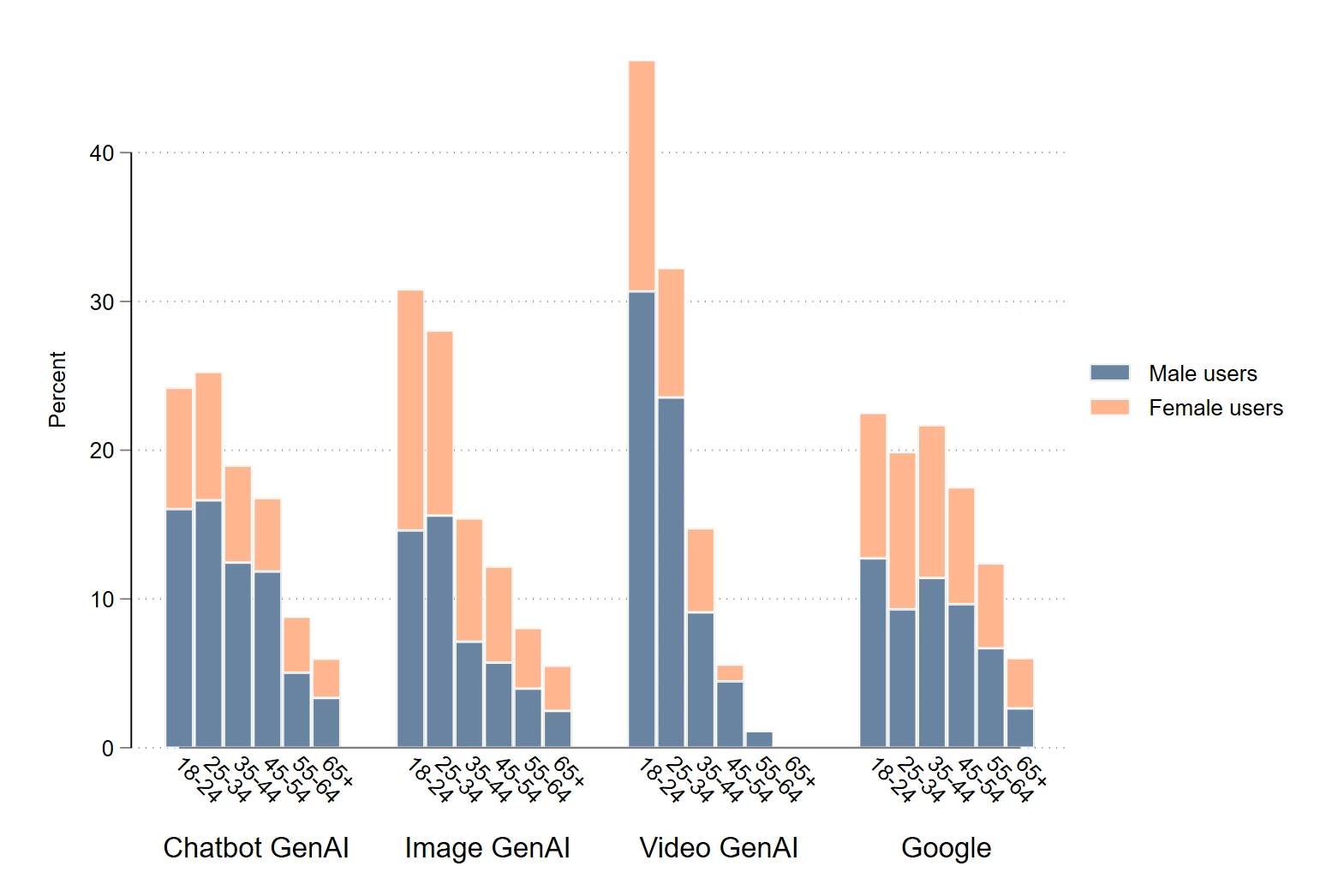
Older Adults Use Digital Technologies Less
Source: Liu, Yan, and He Wang (2026). “Who on Earth Is Using Generative AI?” World Development 199: 107260.
Fast aging, slow digitalization
This gap spans almost every economy: internet use among the working-age population (15 to 64) consistently exceeds that of adults 65 and above. The overlap between aging and digital disconnection is particularly pronounced in middle-income countries, where the aging process has begun or is about to accelerate, but digital usage among older adults stays slow. For instance, Thailand is nearly as aged as the U.S., with 15 percent of its population over 65 against 18 percent in the U.S., yet only 52 percent of older Thais are online, about half the U.S. level. The divide extends across finance, health, work, and public services.
The core paradox is that older adults have much to gain from digital technologies, yet they are often among the least likely to access and use them, causing aging societies to miss out on opportunities for healthier lives, longer productive lives, and reduced care costs.
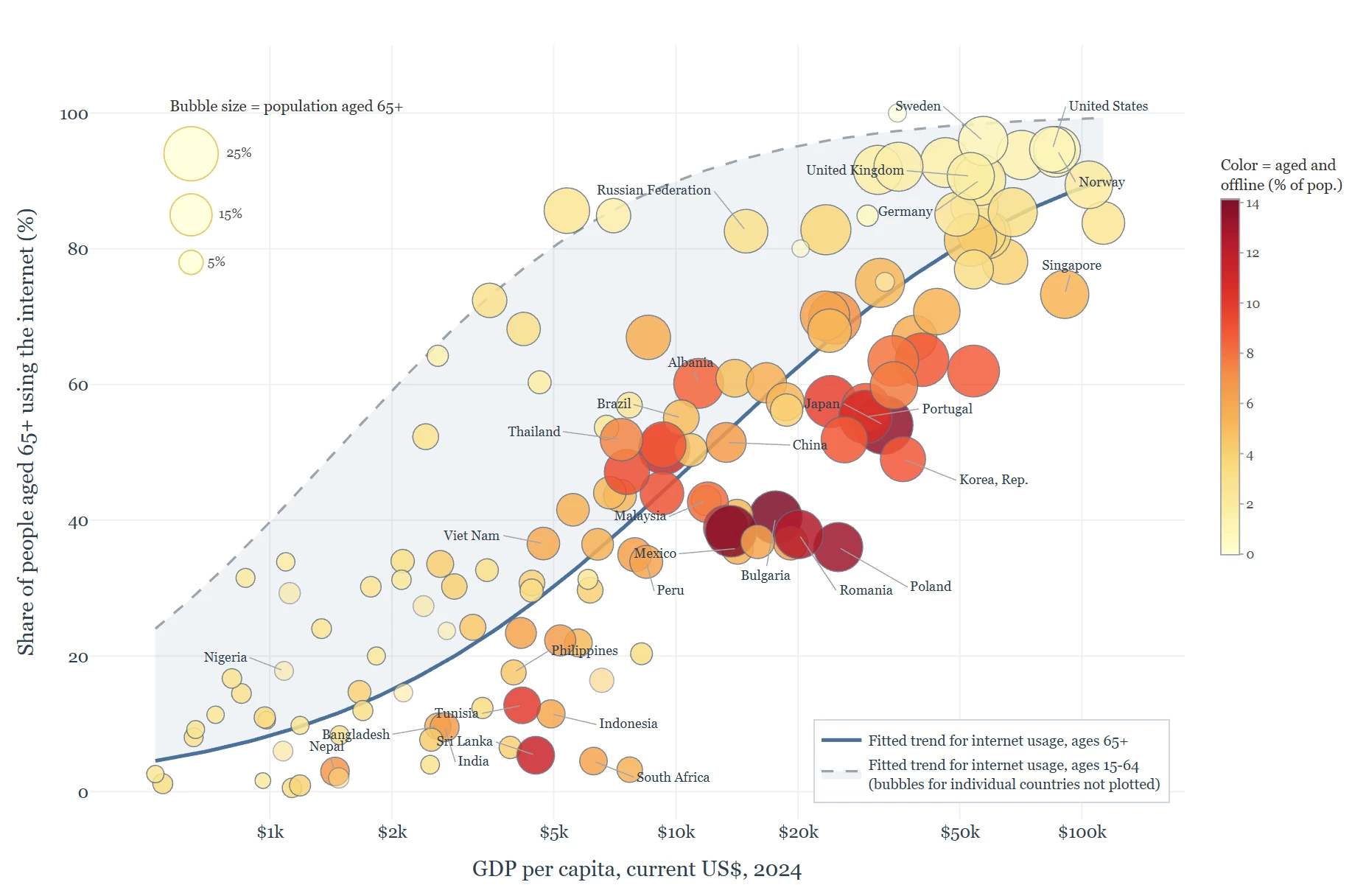
Global Silver Digital Divide in Internet Usage
Source: Authors’ calculation based on World Bank Global Findex 2025 microdata, UN Demographic Yearbook (Undata), and World Development Indicators.
From social inclusion to solutions for aging
Closing this silver digital divide is more than social inclusion. It is a valuable investment that aging societies can make — one that makes a difference in at least three important ways.
Strengthening the workforce: Aging societies face shrinking workforces. In many countries, older adults already work well past retirement age. In Thailand, for example, about a third of people aged 60 and above are still working, most in low-productivity, self-employed jobs. Better-paid work increasingly requires digital skills, and this is precisely where older adults are furthest behind. Equipped with AI and digital skills, older workers can turn experience into higher productivity and new businesses.
Relieving health systems and improving public services: Aging drives relentless demand for care and services, straining public finances. Digital technologies can help people age more healthily and independently while helping governments deliver better public services. AI is already a major source of everyday health guidance, with 230 million people asking health questions each week. Used for prevention and chronic care, it can ease pressure on overstretched health systems and stretch sparse resources.
Unlocking the silver economy: Aging populations are changing consumer demand, as older adults have distinct needs and spending patterns. Yet people aged 65 and above already hold about one-third of global wealth, fueling a “silver economy” expected to reach US$15 trillion by 2030. In East Asia and the Pacific alone, meeting unmet eldercare needs could create 34 million jobs by 2030. Addressing this disparity can unlock this potential by enabling older adults to participate more fully in the digital economy while creating new markets for age-friendly digital and AI solutions.
This divide is not only about today’s older adults. As technology evolves, every generation will need to keep learning. The challenge is building societies where people of all ages can continue to contribute and thrive.
A challenge we can solve
The silver digital divide is not inevitable. Governments and development partners are beginning to act. For instance, Korea aged rapidly and became a super-aged society in 2024, with people aged 65 and above accounting for one-fifth of its population. It has spent years developing practical solutions. These range from nationwide digital literacy programs for older adults to in-person “digital helpers” stationed at locations where older adults frequently visit (such as community centers and elderly care hubs). These programs show digital skills can be learned at any age.
But the attention is not yet enough. The silver digital divide remains largely unmeasured and overlooked in policy. Closing it will require deliberate work: measuring the gap country by country, designing digital tools and public services around how older adults actually live, and treating senior digital inclusion not as a welfare add-on but as core economic policy for aging societies. The agenda is new and wide open.
Source : World Bank