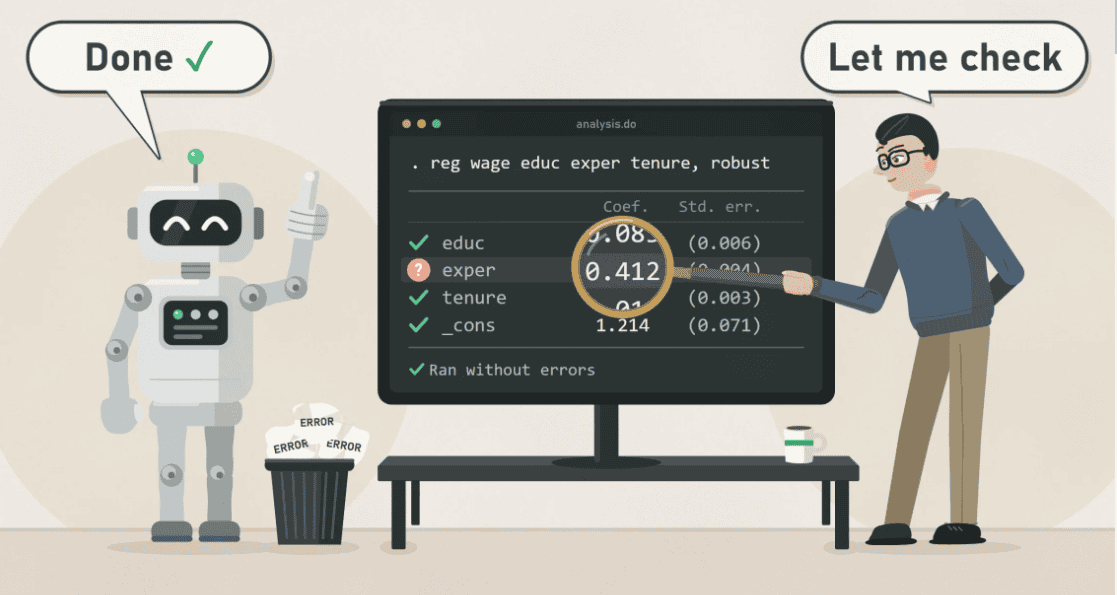



In response to digital dependence, Europe has decided to think bigger. This includes AI gigafactories, tripling data centre capacity, and searching for domestic champions. However, this column argues that the destination for 2050 should be different. For the first time since the railway age, small, open AI models that run close to the data are making it possible for network technologies to distribute economic power rather than concentrate it. Europe’s dense network of small firms, regions, and languages puts it in a strong position to reap the benefits, provided today’s rules on switching, procurement, computing, and diffusion are designed with a mesh in mind rather than a hub.
Shortly after the outbreak of the Second World War, Eli Heckscher delivered a lecture at the Stockholm School of Economics on the fate of “the West”. His diagnosis was, above all, technological. He argued that early industrial machinery had left ample room for individual freedom. However, it was the network systems that followed – railways, the telegraph, power lines and, finally, radio – that changed society. As networks could only be controlled from their centre, Heckscher noted, they strengthened those in control, first large firms and then the state (Heckscher 1939).
The digital economy of the 2020s has so far followed Heckscher’s predictions. Cloud platforms, app stores, and frontier AI models are network systems with a single control room. Their fragility has been repeatedly exposed, for instance when a defective CrowdStrike update disabled 8.5 million Windows devices in July 2024. Still, Europe’s policy response accepts this underlying geometry. The Draghi report attributes much of Europe’s innovation gap to its firms’ inability to grow (Draghi 2024), while the AI Continent Action Plan aims to triple EU data centre capacity within five to seven years. The proposed Cloud and AI Development Act seeks to implement this goal. The implicit vision for 2050 is a European hub to rival those in America and China.
This column argues for a different destination. By 2050, Europe should strive to become the world’s most capable mesh economy: a dense network of small and medium-sized enterprises and municipalities that leverage interoperable, open, and increasingly local digital infrastructure rather than renting intelligence from a few central labs. I refer to this vision as “Small is beautiful 2.0”, in reference to E. F. Schumacher’s (1973) call for technology on a human scale (Küsters 2026); by 2050, it should describe Europe’s digital economy. Instead of calling for de-growth or European autarky, we should think about where economic and political value will lie once intelligence becomes cheap.
Scale is no longer destiny
Schumacher lost the argument in the 1970s because mass production economics were against him. With generative AI, however, the conditions are changing. Open-weight models running on local hardware can now accurately answer most chat and reasoning queries. The “intelligence per watt” of local inference improved by a factor of 5.3 between 2023 and 2025 (Saad-Falcon et al. 2025). Frontier open models reach parity with closed ones within months and cost much less to develop. Nagle and Yue (2025) estimate that if demand had shifted to equivalent open models, users would have saved $24.8 billion in 2025 alone. As the link between training compute and capability is becoming less predictable, the case for treating size as the key lever of progress in AI is further weakened (Hooker 2025).
Two caveats are in order. First, the frontier remains concentrated. Training the most capable models still requires capital and energy that few firms or states can mobilise, and data centre chips still deliver more intelligence per watt than laptops. Secondly, openness does not guarantee pluralism. By tracing downloads on Hugging Face, Longpre et al. (2025) find that the open model economy has recently shifted from US Big Tech to Chinese models such as Qwen and DeepSeek. This trend may signal a new period of concentration and dependence. Therefore, a realistic picture for 2050 must consider a division of labour comprising a handful of frontier hubs and a much larger share of everyday value created at the edge, namely in specialised models that are run close to the data.
Accordingly, EU policymakers should focus on analysing who might capture that edge. If switching costs and opaque licenses tie users to a few providers, cheaper intelligence will simply widen platform margins. If there is sufficient competition and inter-operability along the stack, AI becomes a general-purpose input that firms in Europe can own and apply.
Why the mesh suits Europe
Features that appear to be disadvantages in a race for hubs can become advantages in a mesh. Two-thirds of employment and half of the EU’s value added comes from small and medium-sized enterprises (European Commission 2026: 5). However, in 2025, only one in five EU enterprises were using AI, with more than half of large firms adopting it, but fewer than one in five small ones (Eurostat 2025). A hub strategy is likely to widen this gap because it rewards those who can afford to buy in bulk or at frontier prices. In contrast, a mesh strategy narrows the gap by making capable AI cheap to adopt and safe to own. Europe’s diverse languages and cultures, its regional industrial clusters, and its sector-specific data then become the raw material for many specialised models, rather than being seen as a symptom of fragmentation that must be overcome for the sake of the “AI race”.
This argument has constitutional implications. Concentrated economic power rarely remains purely economic. Firms that control the infrastructure on which administrations and markets rely acquire influence over the rules that govern them. Heckscher’s warning applies to both sides: the same networks that empower large firms also empower the central state. The early ordoliberals drew a similar conclusion regarding European integration, favouring a “large Switzerland” comprising competing entities over a centrally controlled “large France” (Kolev 2021). A mesh economy translates this political resilience into digital infrastructure. As no single provider or authority controls the network, power remains contestable and the failure of one node does not spread further.
What thinking about a mesh economy in 2050 implies for today
If the mesh is the destination, the choices made about digital policy now will be crucial. Firstly, ensure that switching is the default option at every layer of the emerging AI economy. From January 2027, the Data Act will abolish cloud switching charges, and since March 2024, Article 6(7) of the Digital Markets Act has obliged gatekeepers to grant interoperability with features of their operating systems. The same logic should apply to AI: firms should be permitted to transfer fine-tuned models, agent configurations, and associated data between providers and onto their own hardware.
Secondly, write procurement rules with the mesh in mind. Public buyers account for around 15% of the EU’s GDP. The Commission’s proposed Public Procurement Act contains several provisions that could benefit SMEs, including a requirement for suppliers to grant buyers the licenses needed to operate, adapt, and maintain deliverables (Article 63), and a cap on turnover requirements (Article 27). However, open-source solutions are only mentioned as an option for buyers pursuing innovation objectives (Article 61). The co-legislators should require an assessment of exit costs for every digital purchase and give preference to solutions that buyers can run on infrastructure they control.
Thirdly, measure intelligence per watt rather than gigawatts. Capacity targets for gigafactories count inputs. A 2050 benchmark should measure outcomes, such as the proportion of AI workloads that European firms and public bodies can run on their own infrastructure and the cost of switching. Therefore, part of public compute funding should go to distributed edge capacity and shared public inference services. The Swiss open model Apertus, released in 2025 and offered through an international public AI inference utility, demonstrates how such a service could function.
Finally, fund diffusion rather than European champions. More than half of EU Horizon funding currently goes to mid-tech firms and consultancies with limited growth potential. In contrast, single-recipient SME instruments, such as the EIC Accelerator, have a more lasting effect, but only for small, independent firms (Fuest et al. 2025). A European AI extension service modelled on the US Smith-Lever Act of 1914, which took university expertise to farms, could deliver applied AI knowledge to small firms via universities and regional innovation hubs (Frazier 2025). A more proactive competition policy plays a role, too. If their innovations and teams are simply absorbed by the hubs through acquisitions and “acqui-hires” that fall below merger thresholds, public money spent on small firms is ultimately wasted.
Scale as a means, not an end in itself
Critics will argue that a continent without its own frontier model cannot afford to be romantic about small units. However, the argument is not that Europe should avoid large-scale projects. Rather, it is that Europe should not mistake scale for the destination. Learning from Heckscher, Europe’s success in 2050 should be measured by how many of its firms and citizens can build, adapt, and switch AI on their own terms.
Source : VOXeu