

A retail central bank digital currency would give households direct access to central bank money. This would not be a first: until the mid-20th century, many European central banks offered deposit accounts to the non-bank public. Drawing on new archival evidence for nine central banks, this column shows that access to these accounts was broad on paper but narrow in practice. Furthermore, the accounts were likely not neutral for monetary policy, they provided a conditional safe haven in panics, and the effect of deposit flight from commercial banks depended on how central banks recycled the inflows.
Europeans may soon be able to hold money directly at the central bank. As negotiations on the digital euro regulation enter their final stretch (Agence Europe 2026), the current debate centres on holding limits, remuneration, and the concern that deposits could leave banks in a crisis (Bindseil et al. 2024, Bidder et al. 2024, Niepelt 2026, Cecchetti et al. 2026).
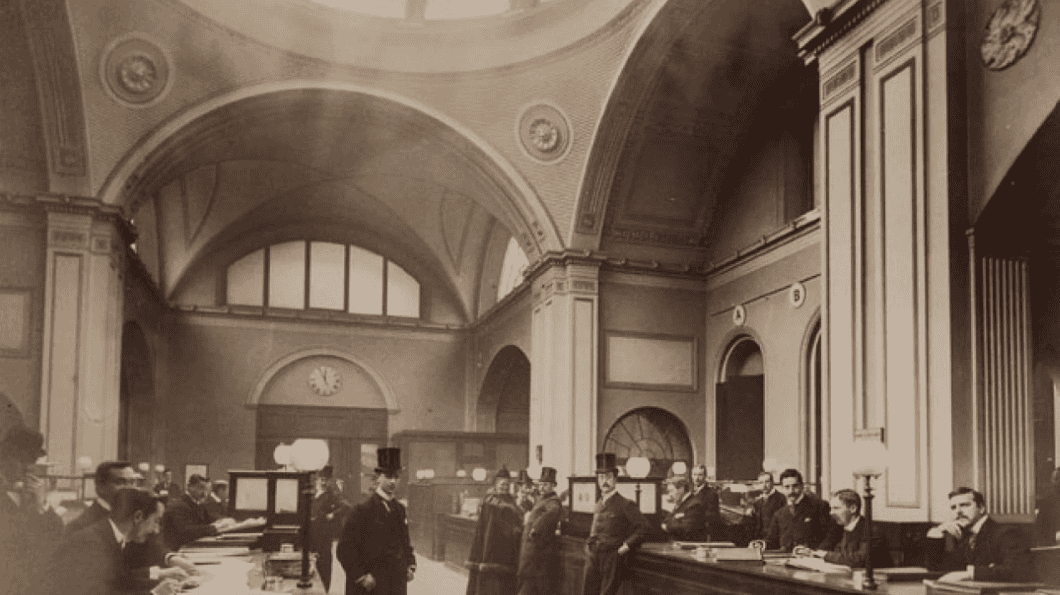
While the idea of retail central bank digital currency (CBDC) sounds like a radical innovation, retail access to central bank money is not entirely new. Until the mid-20th century, many European central banks offered current accounts to individuals and firms other than banks. Like a retail central bank digital currency, these accounts were direct claims of the public on the central bank (Bordo 2021). Building on recent country studies (Antipa and Rieder 2026, Jorge-Sotelo 2026, Mulder 2026), our new paper combines archival evidence for nine European central banks – in Austria-Hungary, Belgium, France, Germany, the Netherlands, Spain, Sweden, Switzerland, and the UK – into a comparative, long-run view (Antipa et al. 2026).
Why central banks offered retail accounts
Figure 1 shows that retail deposits were far from negligible as a share of central bank liabilities, and that their weight varied substantially across countries and over time.
Figure 1 Retail deposits as a share of total central bank liabilities, 1870–1939 (%)


Note: Retail deposits are deposit accounts held by individuals and private-sector firms other than banks, savings banks, and other financial institutions.
Source: Antipa et al. (2026).
Note-issuing central banks did not need deposit funding. Rather, they offered these accounts for two main reasons. First, the accounts were the settlement leg of central bank lending at a time when individuals and firms other than banks could still discount bills of exchange directly at the central bank. Second, before commercial banks built nationwide branch networks, transfers between central bank branches were the cheapest and safest way to move money across a country.
The second motive explains Spain’s inverted U-shape in Figure 1. When the Banco de España expanded its branch network and introduced inter-branch transfers in the 1880s, the relative size of its current accounts more than doubled within a decade. It declined once large commercial banks expanded nationwide after 1900.
The Swedish series illustrates how much terms and mandates mattered for the evolution of central bank retail accounts. The Riksbank’s remunerated retail deposits reached about a fifth of its balance sheet in 1879. After the 1897 Riksbank Act granted the note monopoly and ended interest payments, these balances fell by 94% within a year.
Universal access on paper, narrow use in practice
Formally, access to central bank retail deposits was nearly universal: most central banks opened accounts to any person or firm of good standing. In practice, minimum balances, fees, the absence of remuneration, the prohibition of overdrafts, discretionary admission, and sparse branch networks mostly confined use to firms, merchants, and wealthy households in larger cities.
The Banco de España’s minimum opening deposit of 2,500 pesetas in Madrid was still worth about 1.7 times GDP per capita in 1930. On the eve of WWI, the Austro-Hungarian Bank kept only 5,761 current accounts, against 392,000 cheque accounts at the Austrian Postal Savings Bank. In Switzerland, the central bank and the postal giro integrated their systems and divided the market: in 1931, the average retail account at the Swiss National Bank held 95,000 francs, against 3,300 francs at the postal giro.
Overall, effective access to central bank retail deposits often depended on the cost of access for the marginal user, not on formal eligibility. Demand nonetheless existed, because the mostly unremunerated accounts bundled valuable services for their holders: cheap long-distance payments through the central bank’s branch network, liquidity management tied to the discount window, and, perhaps most importantly, safe storage.
Not neutral for monetary policy
Under the gold standard, cover rules tied note issuance to metallic reserves. In the majority of the nine cases we surveyed, retail deposits were exempt from these rules. Hence, shifting the public from notes into accounts mechanically improved cover ratios. The evidence suggests that some central banks such as the German Reichsbank actively promoted cashless giro settlement for this reason.
The exemption of deposits from cover rules offered less comfort than it seemed, however. Deposits were convertible into notes on demand and were thus contingent claims on the note issue that the cover rules rationed. As a corollary, the Austro-Hungarian Bank expanded its deposit business only after its note ceiling was made flexible in 1888 (Jobst and Rieder 2016).
A conditional safe haven
Central bank accounts served as a safe haven in several crises. During the Overend-Gurney panic of 1866, retail deposits at the Bank of England rose by some £5 million on a pre-crisis stock of about £9 million, lifting the Bank’s share of the London deposit market from 11% to 19% (Antipa and Rieder 2026). During the 1931 crisis in Spain, banks lost 1,216 million pesetas of deposits, while accounts at the Banco de España grew by 273 million pesetas (Jorge-Sotelo 2026). In the summer of 1914, the share of current accounts in De Nederlandsche Bank’s balance sheet rose from about 1% to 10% (Mulder 2026).
Three qualifications matter for current debates. First, these episodes occurred in banking systems without deposit insurance. Second, the central bank was a haven only when it was itself seen as safe. When the continuity of the central bank or its sovereign was in doubt, as in Prussia in 1806 or Austria-Hungary in 1912, no flight into its accounts occurred (Jobst and Rieder 2023). Third, the public often continued to prefer banknotes to central bank deposits in panics, although both were claims on the same institution. In the Netherlands, banknotes accounted for 80% of the increase in the central bank’s balance sheet in the month after the outbreak of WWI, and deposits for only 18%.
Flight to safety and disintermediation
Even though crisis inflows happened regularly, they did not always persist. Some spikes reversed quickly. Others produced durable ‘ratchet’ effects, as at the Bank of England after 1866 or in Spain after 1931, where balances stayed 20–40% above their pre-crisis level for years. Persistence was more likely when the balances at the central bank had low opportunity costs (e.g. in a low-interest-rate environment), when the panic coordinated many new customers on the central bank, who then continued banking with it, giving rise to positive network externalities, and when bank failures had destroyed local private alternatives.
The effect on banks depended on whether and how the central bank passed liquidity back. For the equivalence result of Brunnermeier and Niepelt (2019) to hold, banks that lose deposits must receive replacement funding from the central bank on equivalent terms. Historically, however, central banks provided liquidity mainly by discounting, i.e. outright purchases of bills of exchange, rather than through collateralised advances. A bank that paid out depositors by selling bills to the central bank shrank its balance sheet on both sides; a bank that borrowed against collateral did not. For example, in 1866, the Bank of England’s accommodation through the discount window turned deposit flight into a contraction of commercial bank balance sheets (Antipa and Rieder 2026).
Elsewhere, recycling failed for other reasons. In Spain in 1931, the Banco de España lent to banks through both advances and discounts, but the funding shock was too severe. Preserving credit would have required the central bank to lend directly to the borrowers that banks stopped serving. It had neither the mandate nor the local screening capacity to do so (Jorge-Sotelo 2026). In France in 1930–31, funds leaving banks ended up in gold reserves rather than credit (Baubeau et al. 2021). In both countries, deposit flight contributed to a credit crunch.
Banks’ own reactions mattered too, even when deposits came back. In the Netherlands in 1914, deposits largely returned, but banks more exposed to competition from central bank branches subsequently relied less on deposit funding and expanded lending more slowly (Mulder 2026).
Lessons for today
Central bank retail deposit accounts in the past represent no blueprint for retail central bank digital currency. For example, there was no deposit insurance, payments relied on banknotes, and central banks defended convertibility rather than engaging in modern countercyclical policy. With these caveats, four lessons stand out.
First, take-up was a design outcome. Restrictive holding limits and zero remuneration may well reproduce the modest use and narrow clientele of central bank accounts in much of Europe in the past. At the same time, the plan to prevent firms from holding digital euro balances beyond very short periods would address the disintermediation channel that mattered most in the past, when the increase in balances often came predominantly from firms (e.g. Antipa and Rieder 2026).
Second, safe-haven flows were conditional on trust in the central bank and on what an account offered relative to cash. Third, crisis inflows need not be temporary, in particular when a crisis durably damages private alternatives. Fourth, whether deposit migration harms commercial bank lending depends less on the size of the flows than on whether and how the central bank recycles them. Today’s collateralised operations resemble historical advances more than discounting, which makes neutrality more attainable. As Cecchetti et al. (2026) stress, however, this requires that banks have eligible collateral and that refinancing terms match those of the deposits they replace.
Source : VOXeu