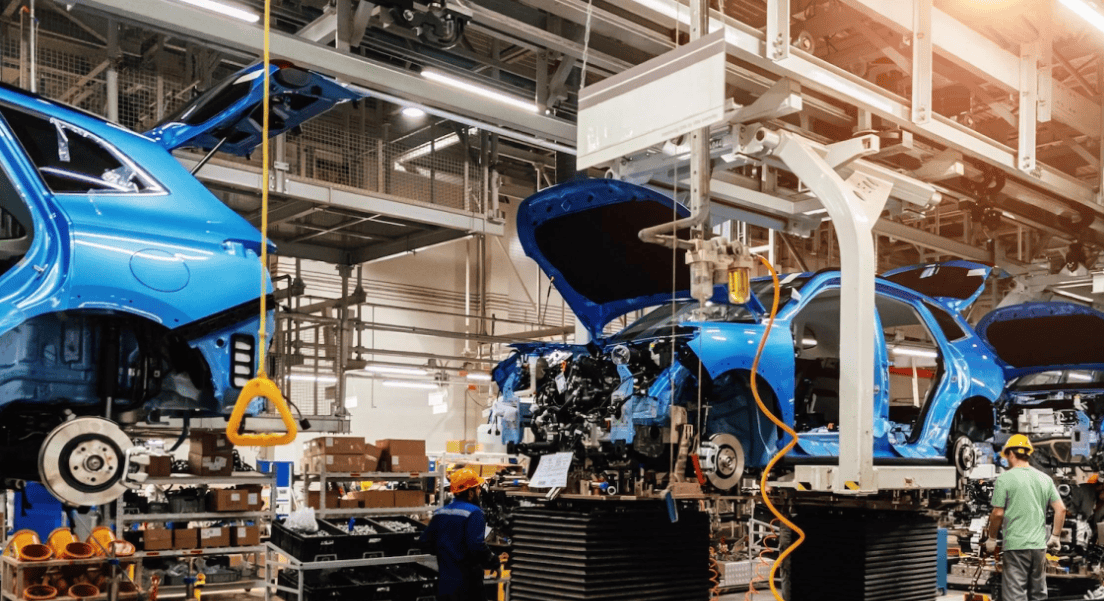



Existing evidence indicates that foreign direct investment promotes growth only when host economies have the human capital and deep financial markets to absorb spillovers. This column documents how the role of these conditions has weakened since the turn of the century. The authors also demonstrate how the growth effects of foreign direct investment vary dramatically across sectors, with a positive effect in the primary sector, no significant effect in manufacturing, and a negative effect in services. Finally, they show that the association between foreign investment and growth is strongest in country-sectors with low participation in global value chains, and that the type of participation matters too.
Governments worldwide spend billions on tax breaks, special economic zones, and investment incentives to attract foreign direct investment. The promise is compelling: multinational firms bring capital, technology, and managerial expertise that will spark domestic growth through productivity spillovers.
The reality? Despite widespread policy support for FDI promotion, aggregate growth regressions have struggled to find robust positive effects. Paraphrasing Robert Solow’s famous quip about computers, FDI seems to be everywhere except in growth regressions. And the relationship between FDI and growth has become even more complicated in the age of global value chains (GVCs).
Existing evidence indicates that FDI promotes growth, but only when host economies can absorb spillovers. Countries need sufficient human capital (Borensztein et al. 1998) and deep financial markets (Alfaro et al. 2004) to enable domestic firms to learn from, invest alongside, and connect with multinationals.
In new research (Bénétrix et al. 2026), we revisit this debate and find that these conditioning effects, which were important in the 1980s and 1990s, have largely disappeared in recent decades. In cross-country and panel regressions using data between 1975-2019, we document that the effect of FDI on growth is frequently not statistically significant. Consistent with Borensztein et al. (1998) and Alfaro et al. (2004), we find that when the stock of human capital or financial depth is sufficiently high, there is a positive effect of FDI for economic growth prior to the 2000s. However, since the turn of the century, the role of these conditions has considerably weakened, as indicated by the small and usually statistically insignificant point estimates on the interaction terms between FDI and conditioning factors (see Figure 1).
Figure 1 FDI and interactive coefficients with 20-year growth spells


Note: This figure plots the coefficients on FDI and its interactions with financial depth (measured as private credit to GDP) and schooling from cross-sectional regressions based on 20-year period averages. Panel A reports the estimated main effect of FDI in specifications without interaction terms. Panel B reports the estimated main effect of FDI when its interaction with financial depth is included, while Panel C reports the estimated coefficient on the interaction between FDI and financial depth. Panel D reports the estimated main effect of FDI when its interaction with schooling is included, and Panel E reports the estimated coefficient on the interaction between FDI and schooling. Both financial depth and schooling are demeaned. The results correspond to the constant sample of developing and emerging economies used in Table 2 of Bénétrix et al. (2026). Points denote point estimates, and shaded bands represent 95% confidence intervals.
From “FDI in a country” to “FDI in a value chain”
Today’s globalisation is not primarily about shipping finished products across borders. It is about fragmenting production into tasks and stages scattered across countries – what Baldwin (2008) called the ‘Great Unbundling’. FDI sits at the heart of this transformation.
The classic story in which foreign capital finances investment within a national production structure is increasingly outdated. Multinational firms now invest not to recreate entire value chains locally, but to plug specific locations into cross-border production networks.
This matters profoundly for growth. Participation in GVCs can provide a fast track to industrialisation and export growth. But it can also lock countries into low-value segments with limited technology diffusion (Antràs 2019, Quast and Kummritz 2017). A country can host large foreign-owned production facilities and impressive export volumes while capturing only a thin slice of the value created.
To investigate these dynamics, we assembled a new dataset of sectoral FDI inflows for up to 112 emerging and developing economies, combined with detailed measures of sector-level GDP and GVC participation. We then use these data to study the link between sectoral FDI and sectoral growth and the mediating role of GVCs. Our study thus differs from Alfaro (2003) and Aykut and Sayek (2007), who study the link between sectoral FDI and overall GDP growth.
Our first key finding is that FDI’s growth effects vary dramatically across sectors. In the primary sector, FDI shows a robust positive association with subsequent sectoral growth. This likely reflects an ‘enclave’ dynamic. Even when natural-resource FDI generates limited spillovers to the broader economy, it raises measured output through capital accumulation, economies of scale, and productivity gains within foreign affiliates themselves – what Aitken and Harrison (1999) called the ‘own-plant effect’.
In manufacturing, there is no significant positive relationship between FDI inflows and growth. This null result is likely to reflect offsetting forces. Foreign entry may raise productivity within multinationals while simultaneously displacing domestic producers or restructuring industries. Moreover, manufacturing FDI is highly heterogeneous, ranging from high-value-added production to export-platform assembly with minimal local content. Sector-level averages conceal enormous variation.
In the service sector, FDI is associated with lower growth. This counterintuitive result makes sense once we recognise that services FDI concentrates in non-tradable or regulated industries (telecommunications, retail, finance) and often takes the form of mergers, acquisitions, and consolidation rather than greenfield expansion. Foreign entry may displace domestic providers without proportional sectoral expansion, even if efficiency improves.
These patterns are robust to demanding specifications that control for country-year shocks, sector-year global trends, and persistent country-sector characteristics.
These sectoral results explain why education and financial depth have faded as conditioning factors in aggregate regressions. We find that local conditions matter most in the primary sector, but the primary sector has steadily declined as a share of total FDI over recent decades (Figure 2). As FDI composition shifts toward services (where local conditions show weaker effects), the aggregate interaction terms naturally weaken.
Figure 2 Sectoral FDI

Figure 2 Sectoral FDI
Note: This figure plots the evolution of sectoral FDI inflows as a percentage of GDP. The top-left panel shows total inflows as a share of GDP, with black bars indicating inflows into the primary sector, medium-gray bars inflows into the secondary sector, and light-grey bars inflows into the tertiary sector. The top-right panel reports the median and interquartile range for the primary sector, while the bottom two panels report the median and interquartile range for the secondary and tertiary sectors, respectively. See Appendix B in Bénétrix, Pallan and Panizza (2026) for the sources and steps in data construction.
The GVC effect: When more FDI doesn’t mean more growth
But sectoral composition isn’t the whole story. We also examine how the growth effects of FDI vary with GVC integration. We find that the association between FDI and growth is strongest in country-sectors with low GVC participation. As sectors become more deeply integrated in GVCs, the relationship weakens and eventually vanishes.
The type of GVC participation matters too. We find that backward participation (importing intermediates to export final goods) tends to weaken the FDI-growth relationship in manufacturing and services. This is the ‘assembly platform’ model: high gross exports, limited domestic value added. However, forward participation (supplying domestic inputs that are embodied in other countries’ exports) leads to a positive association between FDI and growth, particularly in manufacturing. Countries in this position capture more value and benefit more from productivity improvements.
These findings align with the argument that gains from GVC integration depend critically on capabilities and position along the chain (Kummritz 2015). When FDI primarily organises assembly activities relying heavily on imported inputs, domestic value added remains limited unless supplier networks deepen and upgrading occurs. FDI may raise gross output without raising domestic value added proportionally – a gap emphasised in the value-added decomposition of trade (Koopman et al. 2014).
Policy implications: From “more FDI” to “better FDI”
Our findings do not suggest that FDI has become irrelevant. Rather, they indicate that in today’s fragmented global economy, what matters is whether foreign investment generates domestic value added, supports capability building, and enables upgrading within value chains.
This calls for a fundamental shift in investment promotion strategy, from “How do we attract more FDI?” to “What kind of FDI helps capture more value, and how do we ensure domestic firms benefit?”
The global reorganisation of production creates both opportunities and risks. Countries that can translate multinational presence into domestic value creation through strong linkages and upgrading will benefit substantially. Those that remain locked in low-value assembly activities may find that FDI produces impressive trade statistics but disappointing growth outcomes.
Source : VOXeu