


Beyond military sales: The market premium on dual-use research and development
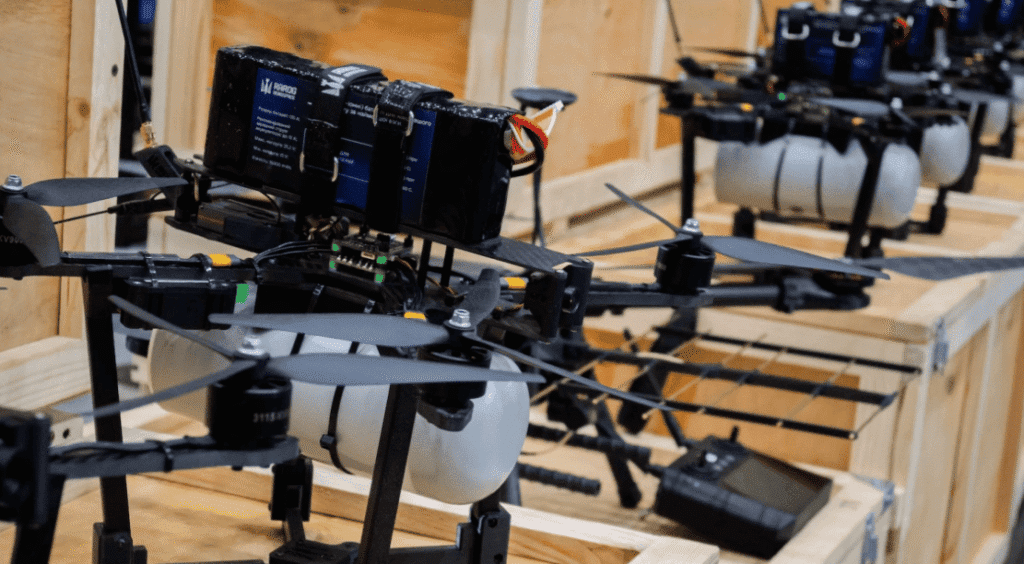
The sharp rise in European defence spending – driven by Russia’s full-scale invasion of Ukraine, President Trump’s re-election and the weakening of US security guarantees,
Public money, private innovation: How government funding built – and sustains – America’s technological leadership

The US has long been the world’s innovation powerhouse, based on a system that combines public funding with private initiative. Yet this model is under
Credit and product innovation in emerging markets: Evidence from India

Access to finance is an important driver of innovation in developed countries. This studies a 2006 reform in India that expanded credit access for many
No, the EU does not impose a 45% tariff on itself

A recent paper which has gathered significant attention estimates a 45% tariff equivalent of intra-EU border costs. This column argues that this estimate is likely
Generative AI: Uneven adoption, labour market returns, and policy implications

Generative AI is being adopted more rapidly than previous digital technologies and has the potential to deliver meaningful productivity gains in professional tasks, raising concerns
Frontiers of digital finance, part 1: A global perspective

The digitisation of payment, trading, and settlement systems is reshaping the financial architecture. This column, the first in a two-part series, offers an overview of
Overcoming the middle-income trap: Why institutions matter

Many middle-income countries (MICs) aspire to achieve high-income status, yet only a few succeed. Since 1990, just 34 countries have made this transition. Today, 108 nations
Multi-issuer stablecoins: A threat to financial stability

Stablecoins – digital tokens pegged to fiat currencies – have emerged as a major innovation in crypto finance, with broad implications for payments and international
Public R&D and Brazil’s agricultural revolution

It is often argued that returns to R&D are low in developing countries, making imported technologies a better path to growth. Yet technologies designed for
Sustained growth through creative destruction: Nobel laureates Philippe Aghion and Peter Howitt

Philippe Aghion and Peter Howitt have been jointly awarded the 2025 Nobel Prize in Economic Sciences with Joel Mokyr ‘for having explained innovation-driven economic growth’.