


The impact of Trump’s economic policy on the EU economy

The re-election of Donald Trump, who ran on a platform that prioritised protectionist policies, has led to heightened uncertainty in the global economy. The January
Happiness, reference dependence, and motivated beliefs in US presidential elections

As elections continue to polarise societies, understanding their psychological dimensions can help both parties and policymakers anticipate how political events impact public wellbeing. This column
Spooky boundaries at a distance: Inductive bias, dynamic models, and behavioural macro

When analysing short-term dynamics in economic models, it is essential to consider long-run conditions that shape forward-looking behaviour. However, enforcing long-run boundary conditions complicates solving
Estimating local GDP everywhere

Local GDP measures are crucial for economic research but are often unreliable or unavailable, particularly in developing countries. Meanwhile, traditional proxies like nightlights have limitations.
Socioeconomic status and graduate education: Unequal choices, unequal outcomes

Large disparities by socioeconomic status in educational attainment and the likelihood of obtaining a university degree have been widely studied, increasingly with a focus on
Sustainability rules are not a block on EU defence financing, but reputational fears are
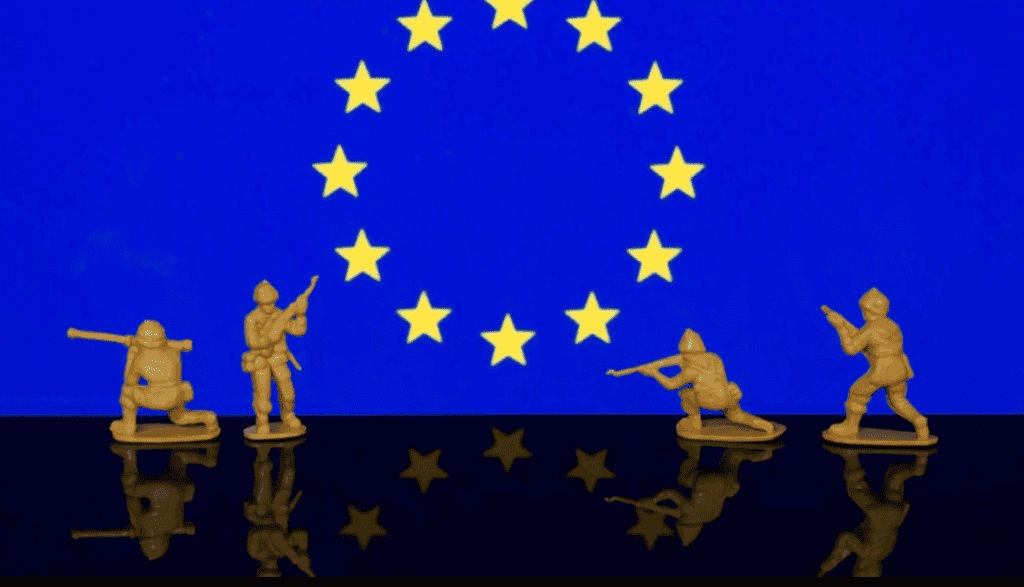
The European Commission’s ReArm Europe plan, published on 5 March, aims to trigger €800 billion in defence investments over four years. European Union money would
Reinforcing EU merger control against the risks of acquisitions by big tech

Since 2000, online platforms that are now within the scope of the European Union’s Digital Markets Act (DMA), have bought nearly 700 small, promising companies
The price of power: Why rising markups hurt innovation and widen inequality

Over the past four decades, the US has seen rising market power, slowing productivity growth, and deepening wealth inequality. This column explores how declining competition
Central bank communication in a polarised world

In an era of increasing political polarisation, public trust in institutions like the US Federal Reserve has become a contentious issue. This column shows that
Spain economy set to grow 2.7% in 2025, buoyed by private consumption, central bank says

The Bank of Spain said on Tuesday that it expects the country’s economy to expand by a strong 2.7% this year, up from the 2.5%