



The most important urban decisions of this century are being made right now, mostly in cities you’ve never heard of.
Today, 4.7 billion people, about 58 percent of the world’s population, live in urban areas. By 2050, that share will cross 70 percent. The bulk of that growth won’t happen in megacities. The next chapter of urbanization will be defined by the rapid spread of smaller cities across the globe, many of them in Sub-Saharan Africa and South Asia, where planning capacity is weakest and fiscal resources are thinnest. That combination should concentrate minds.
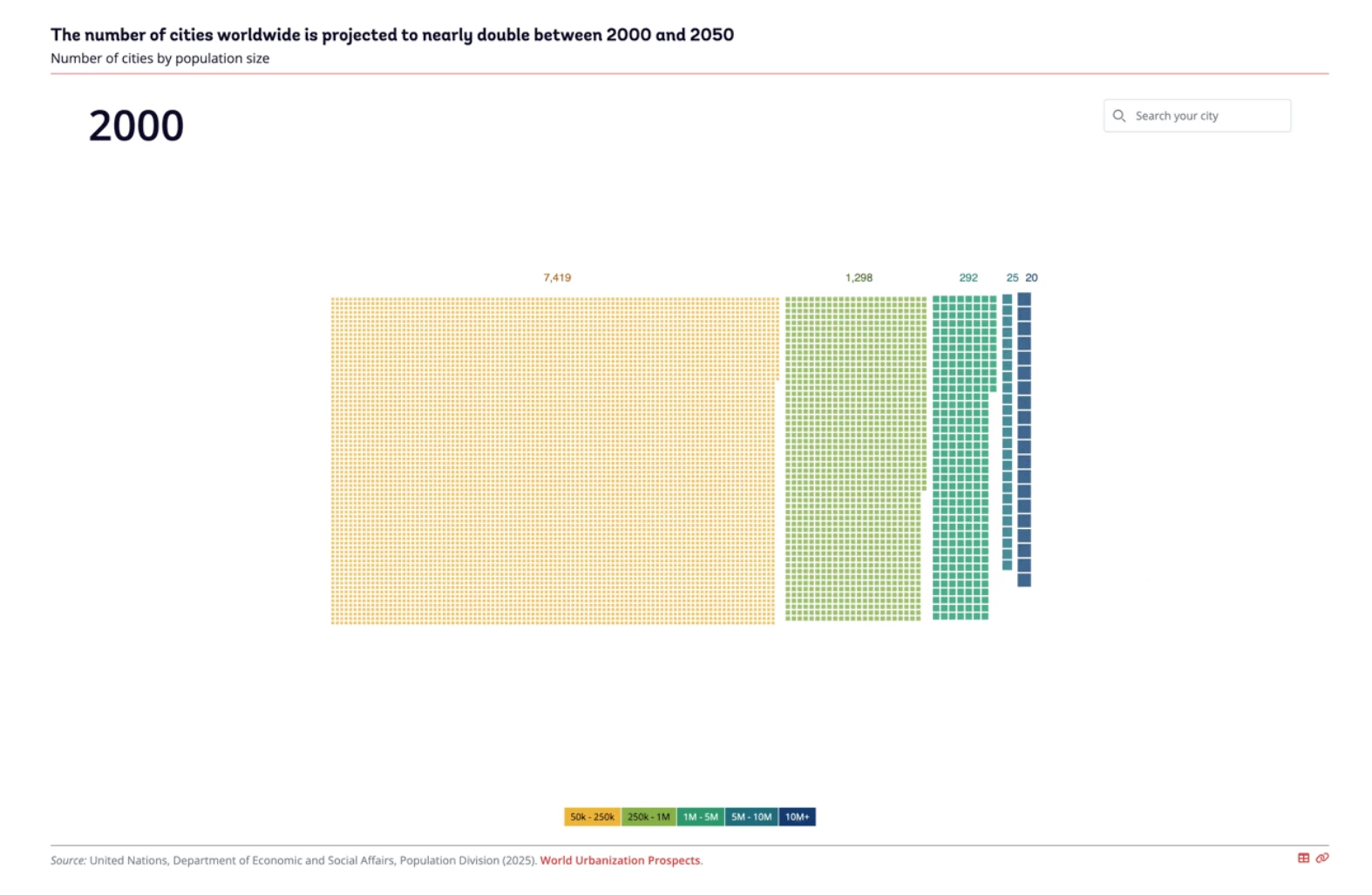
Why the jobs case for cities is stronger than it looks
The standard argument for urban productivity focuses on firms: agglomeration, knowledge spillovers, lower trade costs. All true. But the jobs argument starts somewhere else.
Cities offer workers something rural areas structurally cannot: a thick labor market. Thickness means more firms competing for workers, more occupations available, and more options when one sector contracts. When one industry slows, workers in cities can often shift into other sectors without having to move away. That is job security of a particular kind, one that has nothing to do with formal contracts and everything to do with density.
Skilled workers learn faster when they are surrounded by peers who have similar or complementary skills, ideas, and experience. The result is higher productivity in urban areas, reinforcing cities as engines of economic growth. This isn’t just a high-skill story. In many low- and middle-income economies, even low-wage, often informal jobs in cities can offer pathways to build skills, gain experience, and move into better opportunities over time. The informal economy in an African or South Asian city is frequently a stepping stone. The problem is what happens above it: when the city lacks the housing, transport, and services that make the next rung accessible, the steppingstone becomes a landing.
And the wage premium is real, though not simple. Jobs in cities tend to be higher skilled, formal, and more productive, and that usually means higher pay.
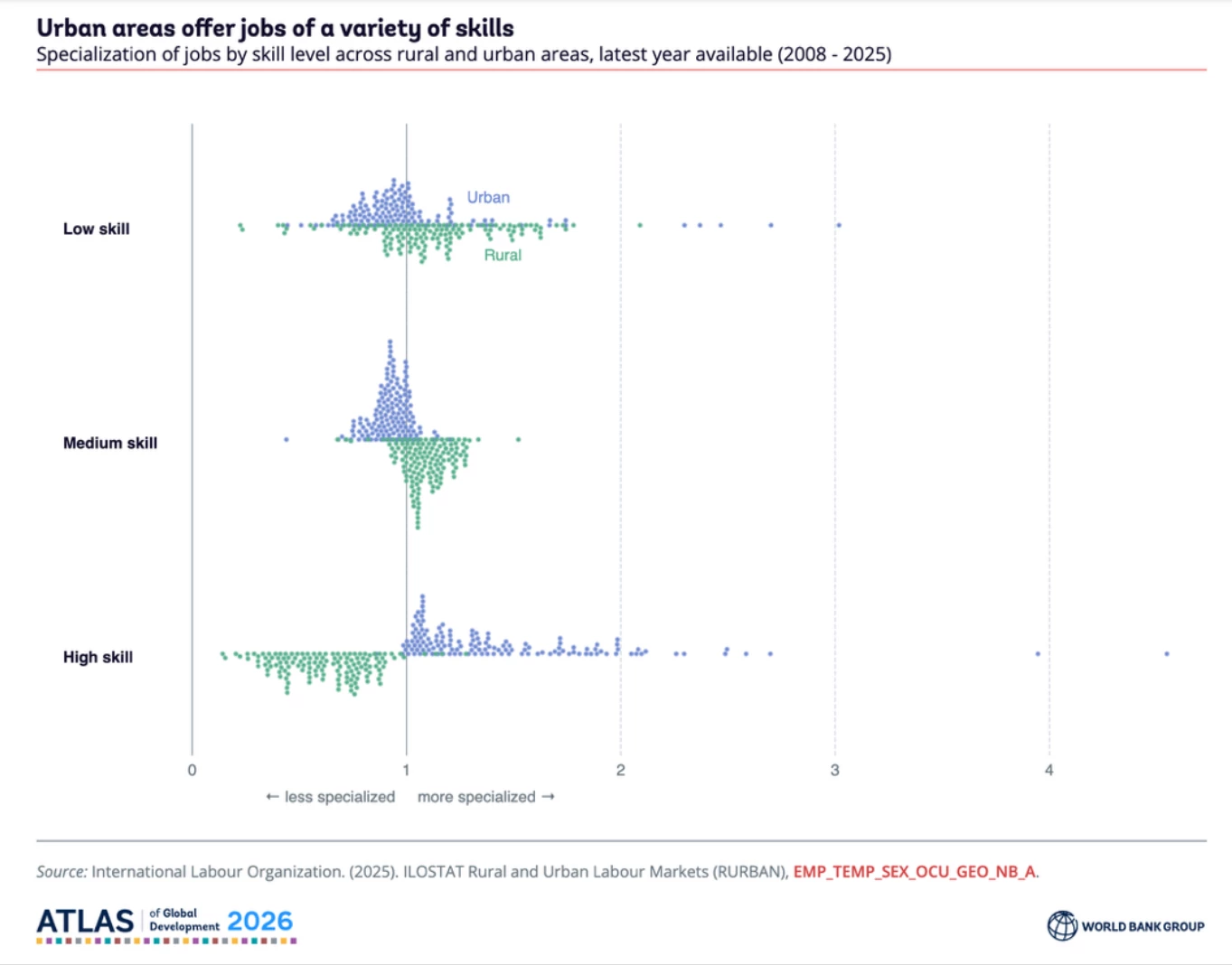
Cities bring together larger and more diverse labor markets, with more firms competing for workers, especially in higher-skill sectors.
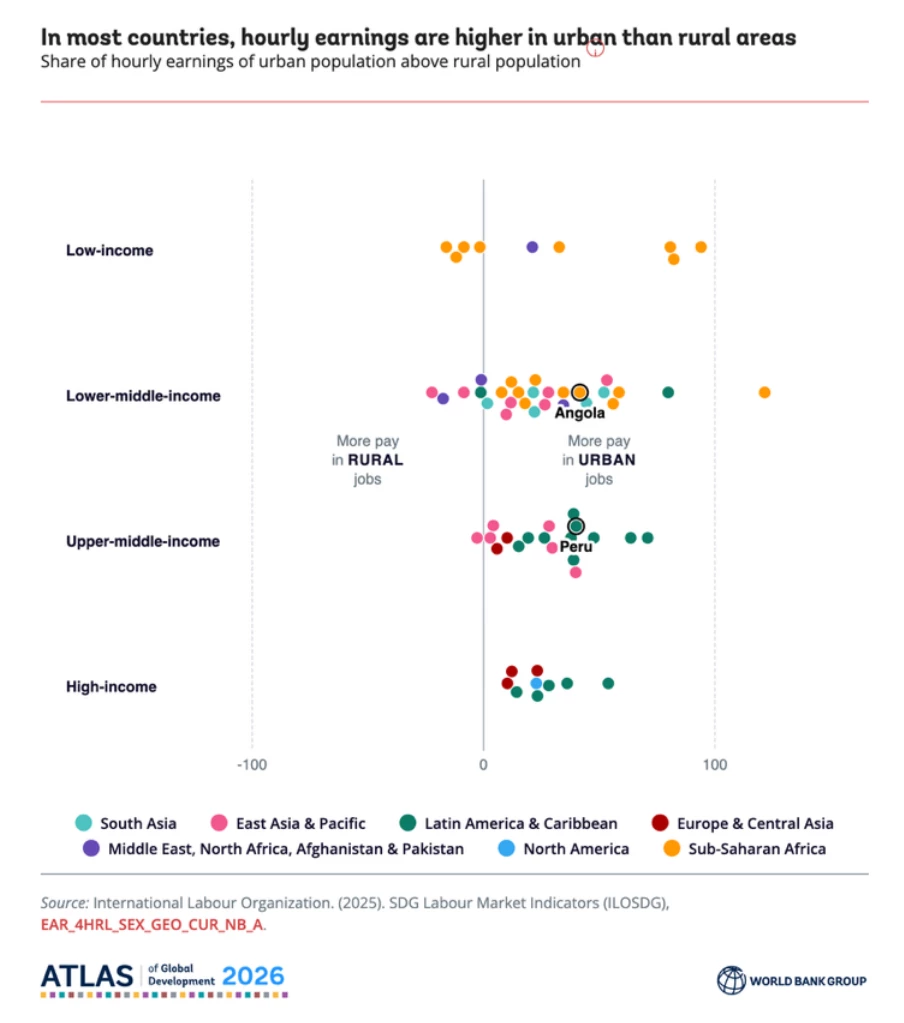
The complication: higher urban wages often do little more than offset the added expenses of city living. Rents absorb the premium. The jobs case for cities, on welfare grounds, ultimately depends on whether the city is planned well enough to keep housing and commute costs from eating the earnings gain.
The math on slums
Nearly one in four urban residents around the world live in slum conditions, many of them in low-income countries. That fraction sounds like it should be falling as incomes rise. In some regions it is. In Sub-Saharan Africa, the slum population fell from more than 60 percent to just over 50 percent over twenty years. The share has been rising again since 2020.
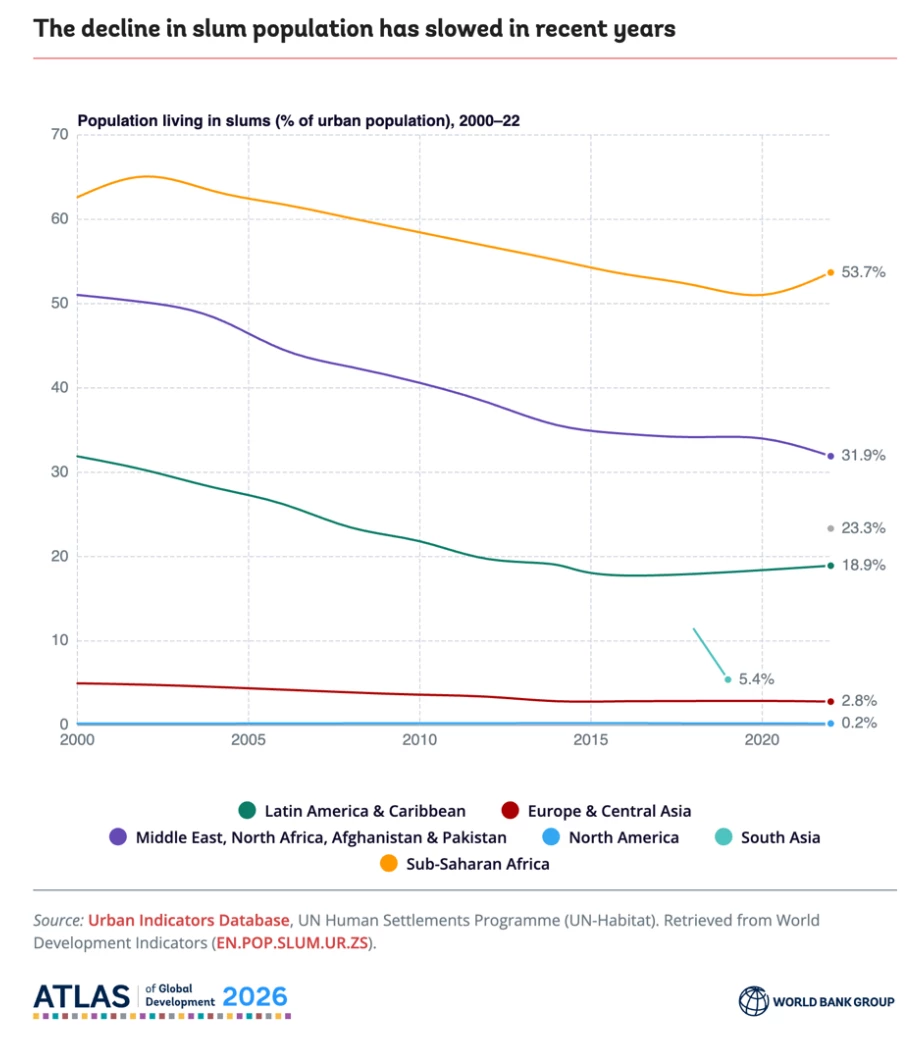
The aggregate number is what should alarm planners: globally, the number of slum dwellers grew from approximately 840 million in 2018 to over one billion by 2022, an increase of more than 160 million people in just four years. A falling slum share in a rapidly growing city still means more people in inadequate conditions. This is the distributional trick that aggregate urbanization statistics routinely conceal.
The built-up area problem
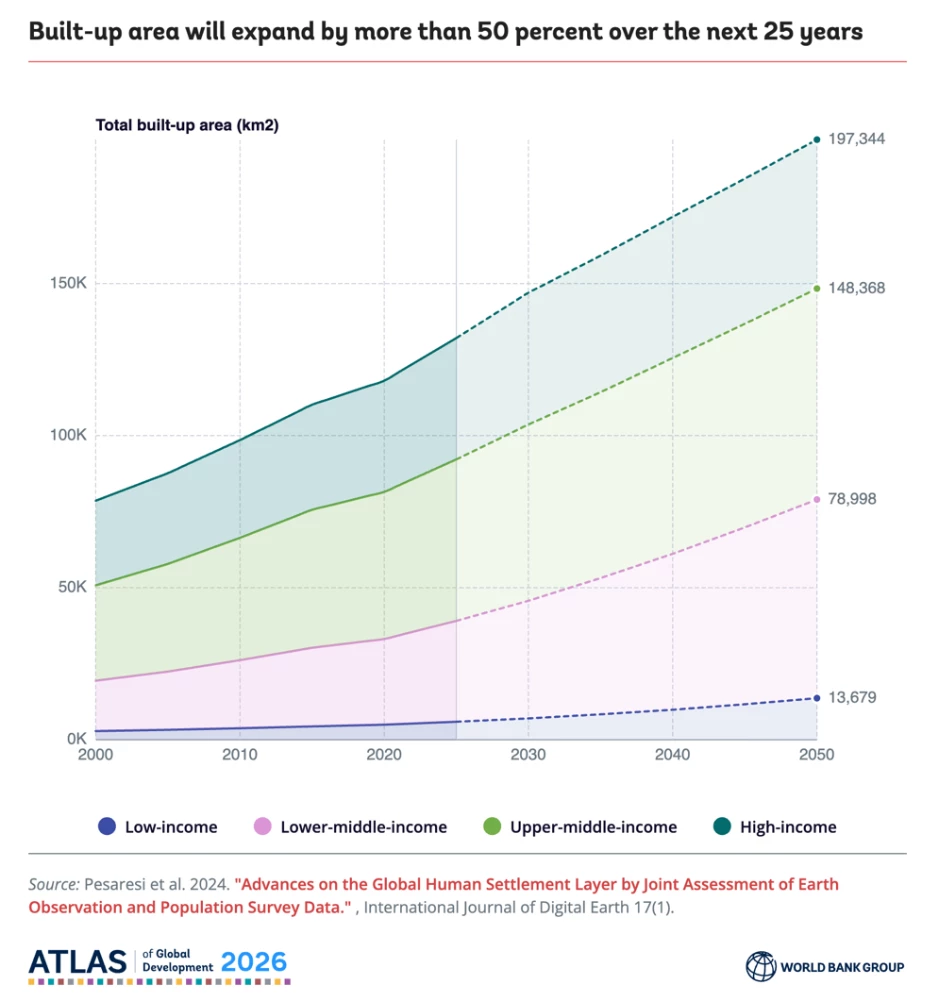
Urban built-up areas, the land surface covered by human-made structures and surfaces, including buildings, roads, and paved land, are projected to grow by more than 50 percent over the next 25 years, largely in lower-middle income and upper-middle income countries.
Cities that deliver on their promise are those that have planned and built infrastructure ahead of population growth. Addis Ababa shows what happens both ways. In 1975, fewer than one million people lived there. By 2025, its population exceeded 6.7 million. Parts of the city expanded with deliberate planning. Parts expanded without it. You can tell which is which by looking at road connectivity, drainage quality, and who has formal tenure.
A fragmented city, where housing, jobs, and services are disconnected, infrastructure does not extend to where people live, and institutions lack the capacity to manage expansion, undermines the agglomeration benefits that make urban areas valuable in the first place. The productive city and the dysfunctional city are not different types. They are the same city, governed differently, across the same decades.
The window
Cities in Sub-Saharan Africa, where urban populations are growing fastest, face this challenge most acutely. At the same time, the pace of expansion in this region means that large parts of the urban environment have yet to be built, giving today’s planning and investment decisions lasting influence over future productivity and opportunity.
This is the argument for urgency that gets lost in aggregate urbanization narratives: the physical infrastructure going into African cities right now, the road layouts, the land tenure systems, the drainage standards, will determine fiscal capacity and service quality for the next fifty years. Getting the block size wrong in Kampala in 2026 means paying for it in 2076. Reforming it will be exponentially harder once the informal settlements have consolidated and the political economy of land has calcified around whoever got there first.
Source : World Bank