


Macroprudential policy for banks: Build the countercyclical capital buffer when there is headroom for doing so

Numerous central banks started to build the countercyclical capital buffer as bank profitability began to soar during the recent tightening cycle. Recent evidence suggests that
Bhutan & Singapore: Advancing Carbon Market Innovation through Partnership

Asia’s rise as a global carbon trading hub is grounded in its strong financial infrastructure, forward-looking regulatory environment, and commitment to environmental innovation. As a
My practical tips for designing and analyzing powerful experiments

I have a new paper coming out in a symposium on power calculations in the journal Fiscal Studies, which puts together my tips for applied researchers on designing
World Hepatitis Day: What the data reveal about global gaps in immunization

An estimated 254 million people (approximately 3 in 100) lived with chronic hepatitis B in 2022, a virus which causes inflammation of the liver and
From crisis to action: Mobilizing tools for rapid response and lasting resilience
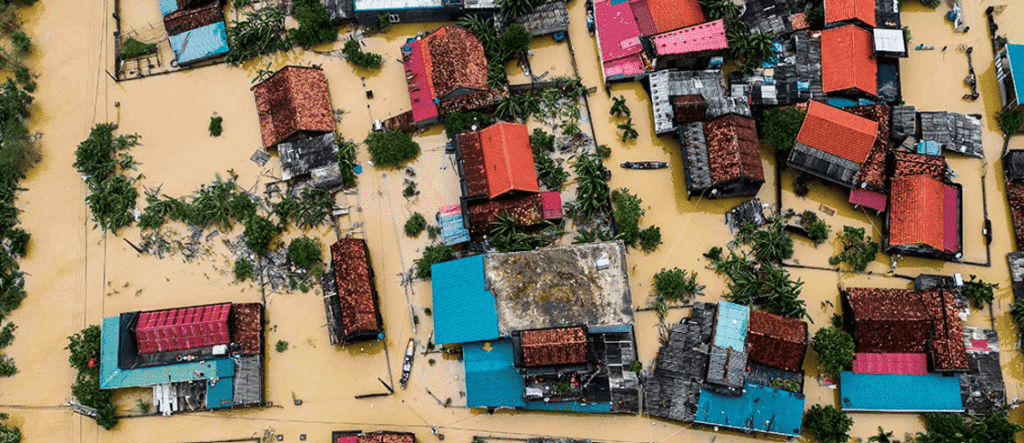
Over the past year, I’ve seen a growing interest in, and a stronger demand for, better tools to prepare for and respond to crises. Our
Trade’s emissions paradox: What it means for developing countries

International trade plays a complex role in shaping environmental outcomes. A new World Bank paper, “Trade’s Emissions Paradox: Cutting Greenhouse Gases, Raising Air Pollution,” prepared
Trade and Development Chart: Exports to developing economies drive rich-country employment growth

As global trade expands, so does the number of workers in high-income countries whose jobs are tied to exports. More of that growth is generated by
Africa’s path to claiming the 21st century runs through its cities

In their recent blog Can Africa Claim the 21st Century?, Andrew Dabalen and Chorching Goh rightly highlight Africa’s moment of opportunity: a convergence of global attention,
Stanley Fischer and the Annual Bank Conference on Development Economics: A tribute

Stanley Fischer, the World Bank’s chief economist from January 1988 to August 1990, passed away on May 31, 2025. Stan Fischer’s immense professional contributions to
Bias in, bias out: How to strengthen evidence aggregation

In a world saturated with research and policy recommendations, it’s more important than ever to synthesize evidence well. A single study in a single setting