


For decades, the world made remarkable progress in reducing extreme poverty. This transformation, driven in large part by economic growth, lifted more than a billion people out of poverty. But as the Atlas of Global Development 2026 shows, progress is slowing, and in some places, reversing.
A historic decline in extreme poverty
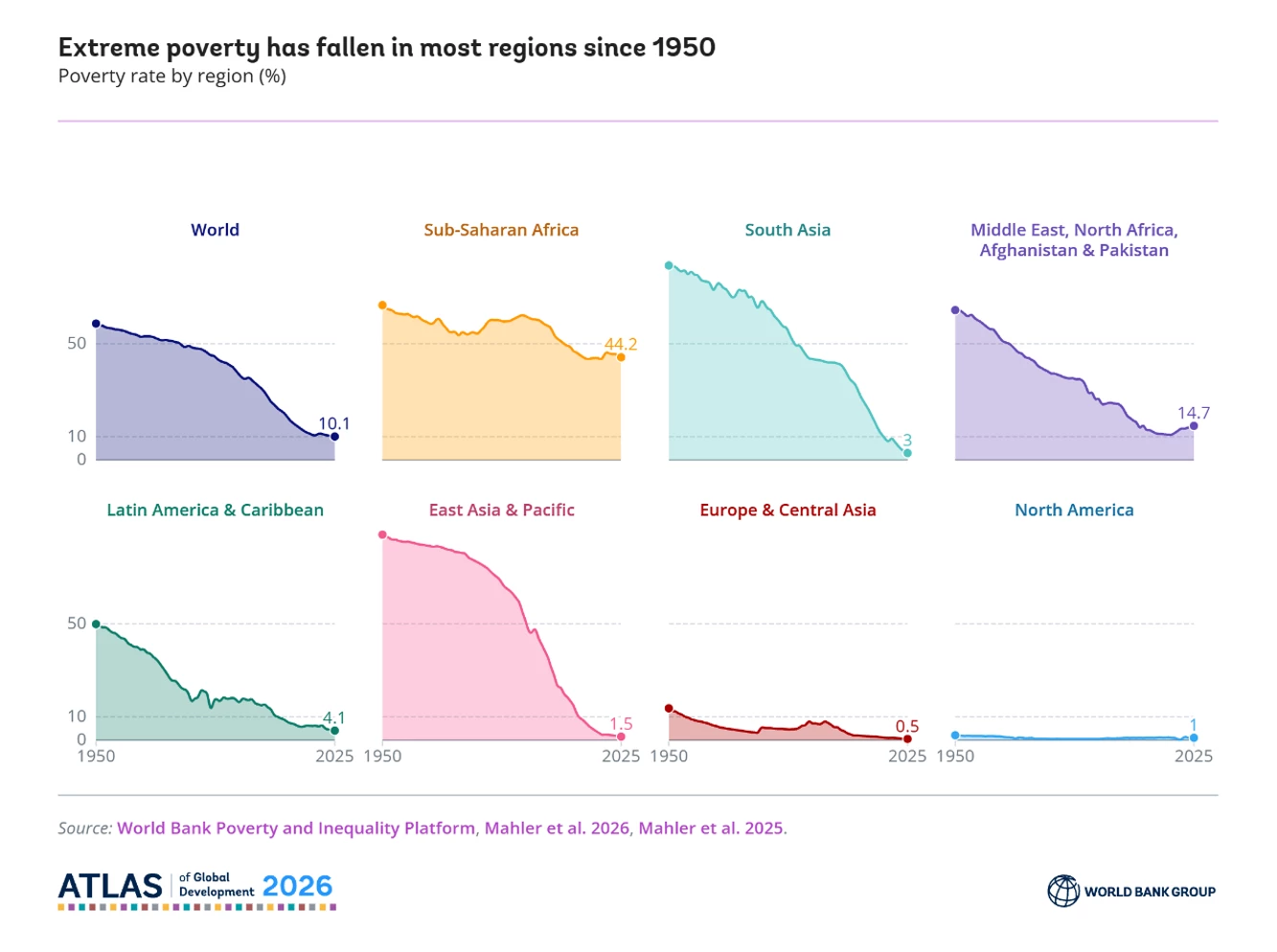
Over the past several decades, the world has achieved extraordinary progress in reducing extreme poverty. In 1950, the majority of people globally — around 60 percent — lived in extreme poverty, struggling to meet basic needs.
Since then, sustained economic growth, particularly in regions such as East and South Asia, has driven a steady decline, bringing the global extreme poverty rate down to roughly 10 percent today. This long-term trend reflects one of the most significant development achievements in history, with hundreds of millions of people lifted out of poverty and improvements seen across many regions.
Countries left behind
Extreme poverty is proving especially persistent in a group of 43 countries where progress has stalled or reversed. Many of these countries face overlapping challenges — such as conflict, weak institutions, and limited economic opportunities — that make sustained poverty reduction difficult.
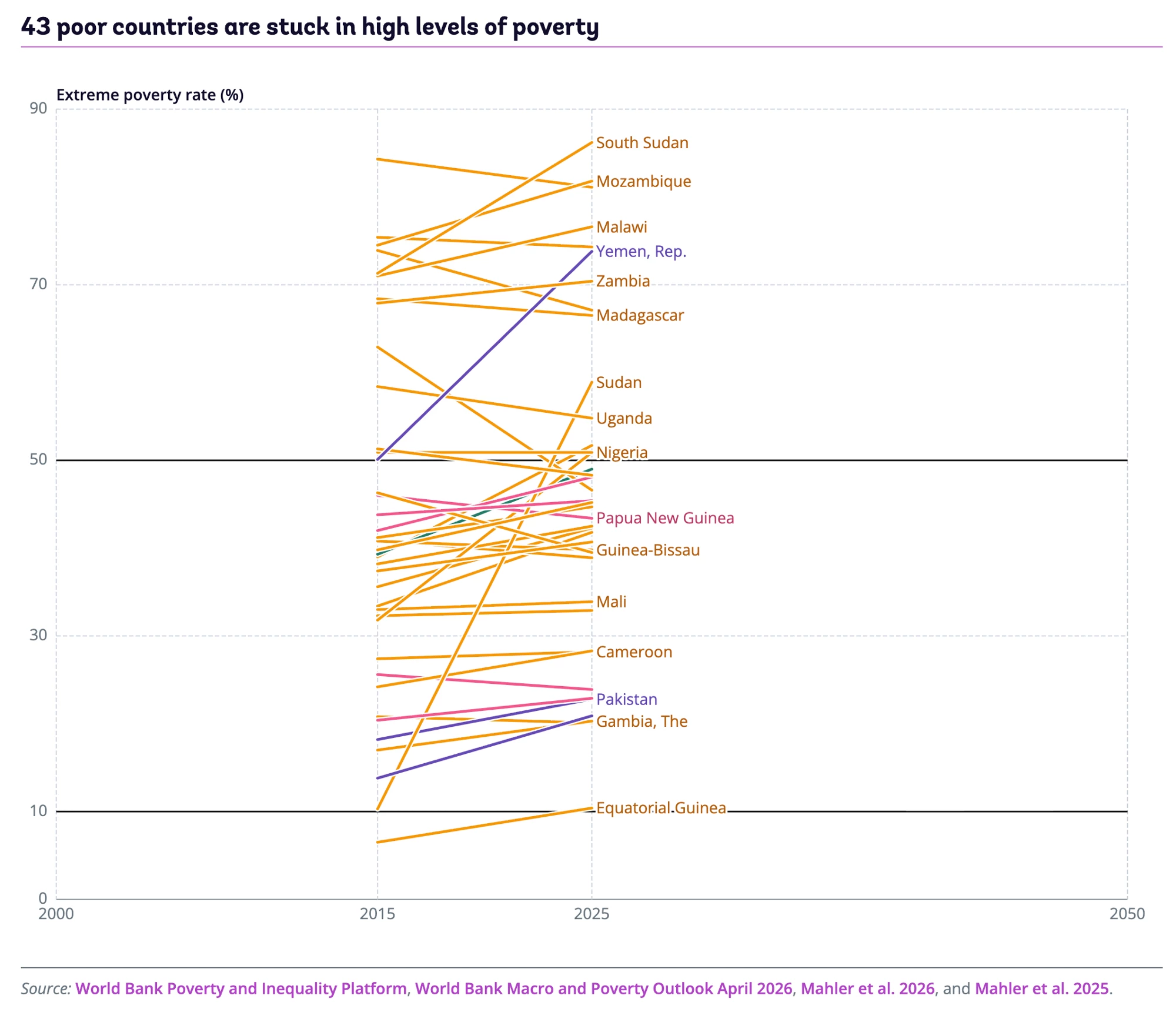
This pattern suggests that, while global poverty has declined over past decades, some countries appear caught in a cycle where progress is slow, fragile, and harder to sustain, making the goal of ending extreme poverty increasingly dependent on addressing these deep-rooted constraints.
Poverty could rise again
Looking ahead, there is a growing risk that global poverty could increase rather than continue its long-term decline. In many of the countries with the highest poverty levels, progress has stalled or reversed, and more than half of the world’s poor now live in places where poverty is not falling. If these trends persist, the number of people living in extreme poverty could rise in the coming decades, with projections suggesting that 600 million more people could fall into extreme poverty by 2050 if they continue along their current pathway.
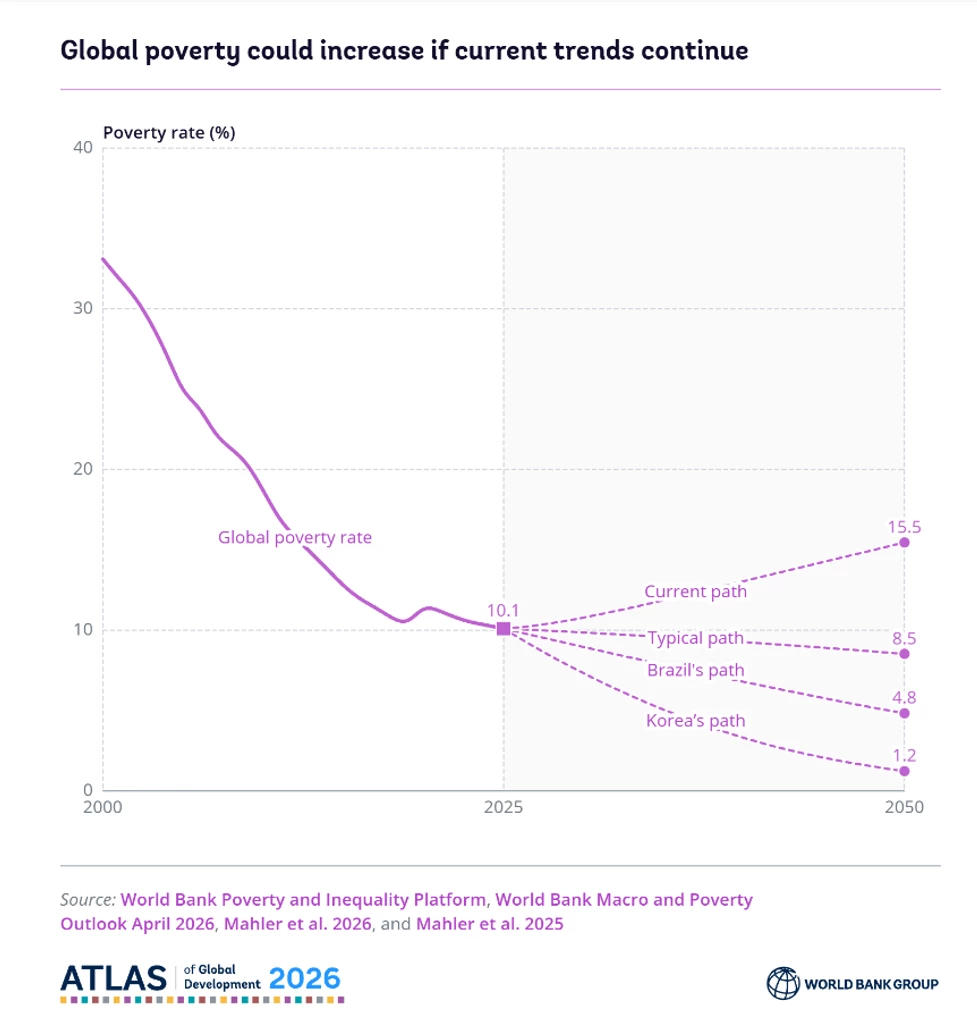
This marks a significant departure from past decades. Tackling entrenched challenges including conflict and poor governance will be needed to prevent a future where poverty is on the rise.
Source : World Bank