

Whether the agrifood sector can create jobs will depend on its ability to shift from growing food to growing businesses.
This ambition sits at the heart of the World Bank Group’s AgriConnect initiative, which focuses on building the right ecosystem—strong cooperatives, market links, and access to finance— to support smallholders and agribusinesses. AgriConnect mobilizes partners and action through three pillars: infrastructure, policy reforms, and capital mobilization.
Under AgriConnect’s infrastructure pillar, prioritizing digital solutions and agriculture innovation is essential, particularly in the face of climate risks. Climate-resilient practices that enhance productivity, efforts to reach the last mile, and targeted financing are essential for farmers and agribusinesses to create jobs.
Implemented by the CGIAR and funded by the World Bank Group, the AICCRA program is making AgriConnect in Africa a reality – by developing public- and private-sector-driven scaling strategies to make climate-smart agriculture innovations more accessible to smallholders. In Zambia and Ghana, AICCRA’s strategy has focused on supporting agribusinesses to scale these innovations through accelerator programs.
Agribusiness accelerators: the missing link between innovation, impact, and jobs
A strong agribusiness sector can transform rural areas into engines of jobs and higher incomes. Yet many agribusinesses face persistent obstacles that limit their ability to drive impact, such as high upfront risk and insufficient financing.
By pairing businesses with de-risking grants and technical assistance, accelerators can help build the right infrastructure, mobilize capital, and create the conditions for enterprises to scale innovation, grow, and create jobs.
In Ghana, the AICCRA Accelerator has brought eight agribusinesses into consortia to deploy four bundled solutions. One of the consortia, led by a small business called M&B Seeds, combined climate information services (CIS) with improved seeds and market linkages.
A second consortium led by another seed business, Kukobila Nasia Farms Limited, combined CIS, advisory services, and the provision of machinery to boost sustainable production and soil health for maize and cowpea. Thanks to a partnership with Farm Radio International, the program delivered additional information to farmers in remote areas. These activities enabled 117,000 smallholder farmers to cope with longer dry spells, achieving maize and cowpea yields 71% and 39% higher than the national average.
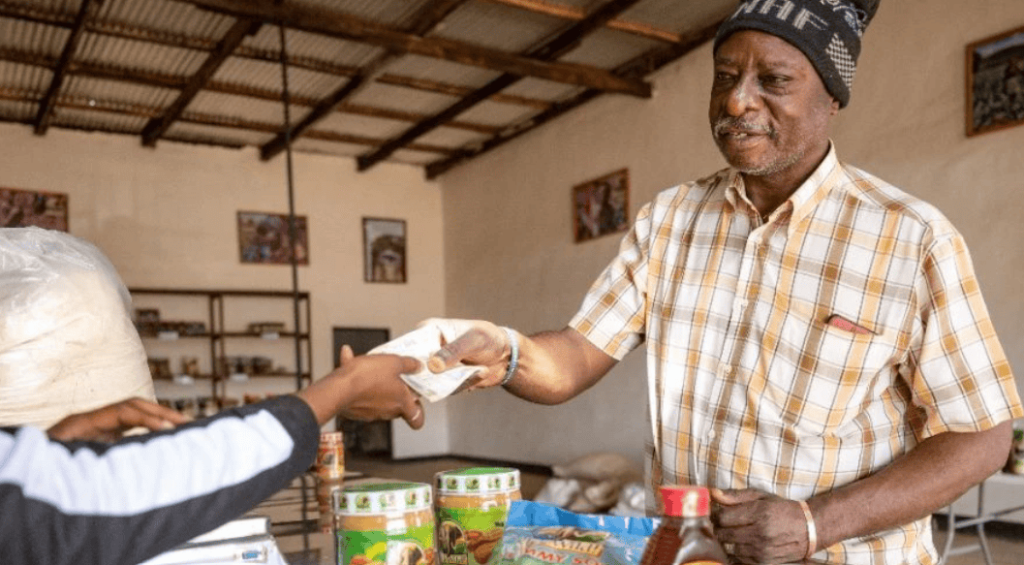
In Zambia, the AICCRA Accelerator has supported 14 agribusinesses and improved the livelihoods of over 300,000 Zambian farmers by helping scale five agricultural innovation solutions, including drought-tolerant seed varieties. For instance, a partnership between two agribusinesses, PlantCatalyst and Corteva, together with iDE, a non-governmental organization and the ZambiaAgriculture Research Institute, enabled 24,200 farmers to access drought-tolerant seed varieties for maize, groundnut, and soybeans. Advice delivered to farmers on digital platforms, training on climate-smart agriculture, and deliberate efforts to connect farmers to markets have accelerated the adoption of these seeds. The result? Farmers are reporting better yields, higher profits, and overall consider themselves more resilient to climate shocks.
A practical methodology for agribusiness accelerators
The agrifood jobs challenge can only be solved if agribusinesses are involved in the agriculture innovation agenda. Accelerators are a successful model to achieve that goal. AICCRA’s experience suggests several waysways to replicate these solutions across accelerator programs in Africa and beyond:
- Design with clear impact metrics: Establish clear outcomes targeting participation, but also productivity gains, resilience, profitability, and climate-smart adoption. Implement monitoring systems to track progress regularly for adjustments and learning.
- Understand the market to minimize barriers: Conduct an in-depth market analysis in the target area, identify dominant value chains, and understand the specific challenges faced by agribusinesses to address critical needs (including enabling environment).
- Select market-validated scalable innovations: Pre-identify innovations validated and tailored to local contexts. Use tools like the Innovation Packaging and Scaling Readiness (IPSR) approach to select innovations with validated scaling pathways in an early-participatory process.
- Source partners with transparency and establish clear performance goals: Identify the most suitable partners following transparent criteria from call for proposals to contract. Establish measurable milestones and deliverables to track progress.
- Provide investment-readiness and technical support: Prepare participants to attract new funding through investment-readiness support. Provide innovation-specific technical assistance in areas such as CSA practices or CIS use.
- Build strong post-accelerator ecosystems: Create alumni networks with mentoring and shared resources for fostering long-term connections. Facilitate linkages with new investors after the program ends.
- Integrate gender and youth inclusion: Prioritize women- and youth-led agribusinesses through targeted outreach campaigns. Provide tailored mentorship, digital tools, and targeted capacity-building that reflect differentiated needs.
- Ethically leverage AI tools: Reduce administrative workload with tailored AI tools such as an AI-powered methodology developed by AICCRA and CGIAR researchers that generates risk assessments for agribusinesses —to be carefully reviewed by project managers.
With global food demand expected to rise by 30 percent by 2050, investing in agribusiness is not just about feeding the world – it is a major opportunity to grow businesses and create better jobs. Supporting agribusinesses to scale innovations is critical to that agenda. Accelerator programs like those under AICCRA offer a proven pathway for these businesses to thrive.
Source : World Bank