


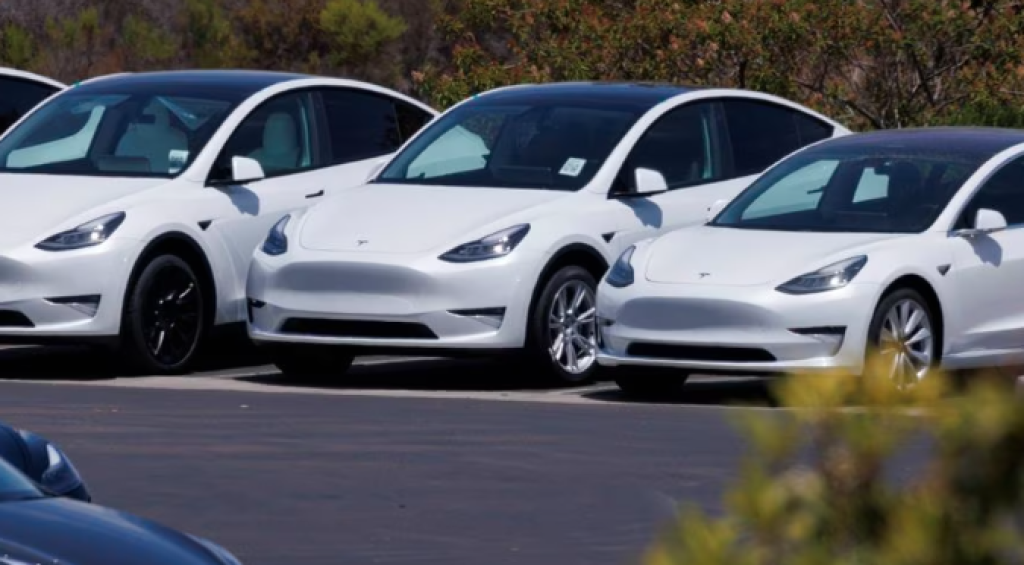
WASHINGTON, Feb 3 (Reuters) – The U.S. Treasury Department said Friday it will make more Tesla, Ford Motor, General Motors and Volkswagen electric vehicles eligible for up to $7,500 tax credits after it revised its vehicle classification definitions.
The reversal by Treasury is a win for Tesla, GM, Ford and other automakers which had pressed the Biden administration to change the vehicle definitions.
Under the $430 billion climate bill approved in August, SUVs can be priced at up to $80,000 to qualify for EV tax credits, while cars, sedans and wagons can only be priced at up to $55,000.
The Treasury announcement allows vehicles automakers consider crossover SUVs to qualify for credits. The decision raises the retail price cap to $80,000 from $55,000 for GM’s Cadillac Lyriq, Tesla’s five-seat Model Y, Volkswagen’s ID.4, the Ford Mustang Mach-E and Escape Plug-in Hybrid. Only one version of the VW 1D.4 had been considered an SUV by the Treasury.
The Treasury had said in December it would use Environmental Protection Agency (EPA) CAFE standards to determine whether a vehicle was a car or SUV for EV tax credit purposes but will now use the “consumer-facing EPA Fuel Economy Labeling standard … this change will allow crossover vehicles that share similar features to be treated consistently.”
Alliance for Automotive Innovation Chief Executive John Bozzella praised the decision “that clears up some EV tax credit confusion and instantly helps customers shopping for an electric crossover or SUV.
GM, which had urged the U.S. Treasury to reconsider classification of the Lyriq to allow it to qualify, said the change “will provide the needed clarity to consumers and dealers, as well as regulators and manufacturers.”
Tesla Chief Executive Elon Musk tweeted last month the EV tax rules were “messed up.” The five-seat version of the Tesla Model Y is not considered an SUV, while the Model Y seven-seat version is and can qualify for the credit.
Musk raised the issue with White House officials during a meeting last week, a person briefed on the matter said.
The Treasury said the revised definition will apply to EV purchases since Jan. 1.
The Treasury in December said it would not issue proposed guidance on battery sourcing rules until March, effectively giving some EVs not meeting new requirements a few months of eligibility in 2023 before the battery rules take effect and drawing outrage from Senator Joe Manchin. It reiterated the timeline Friday.
Source : Reuters