

Imagine you’ve just been appointed Minister of Finance. Tomorrow morning, you must decide where to build schools and clinics, how much to borrow, and which programs to prioritize. To govern well, you need answers to basic questions: How fast is the economy growing? How many children are healthy? How many young people are unemployed?
So what do you find when you open the briefing folders? You are likely to be disappointed. Here are three things that stood out as we wrote this story on development data.
The data is older than you think
For the average low- and middle-income economy, the latest labor force survey is from 2019, the most recent poverty survey is from 2020, and the most recent health survey is from 2015 — more than 10 years ago. In nearly 6 out of 10 low- and middle-income economies, the most recent poverty survey is more than five years old.
In many cases, the absence of timely data means that statistics in areas such as labor markets and public health still portray a pre-COVID-19 world. This can have serious consequences that even modern methods cannot fully offset. In Nigeria, model-based estimates missed a large rise in poverty. In Ghana, outdated methodologies and data led to a 60 percent revision in GDP.
Hundreds of millions of children are invisible to the data
Around 778 million children aged 5–14 — nearly half of the world’s children in that age range — live in an economy with no recent internationally comparable learning assessment. Without these data, it is hard to know whether or not children are falling behind.
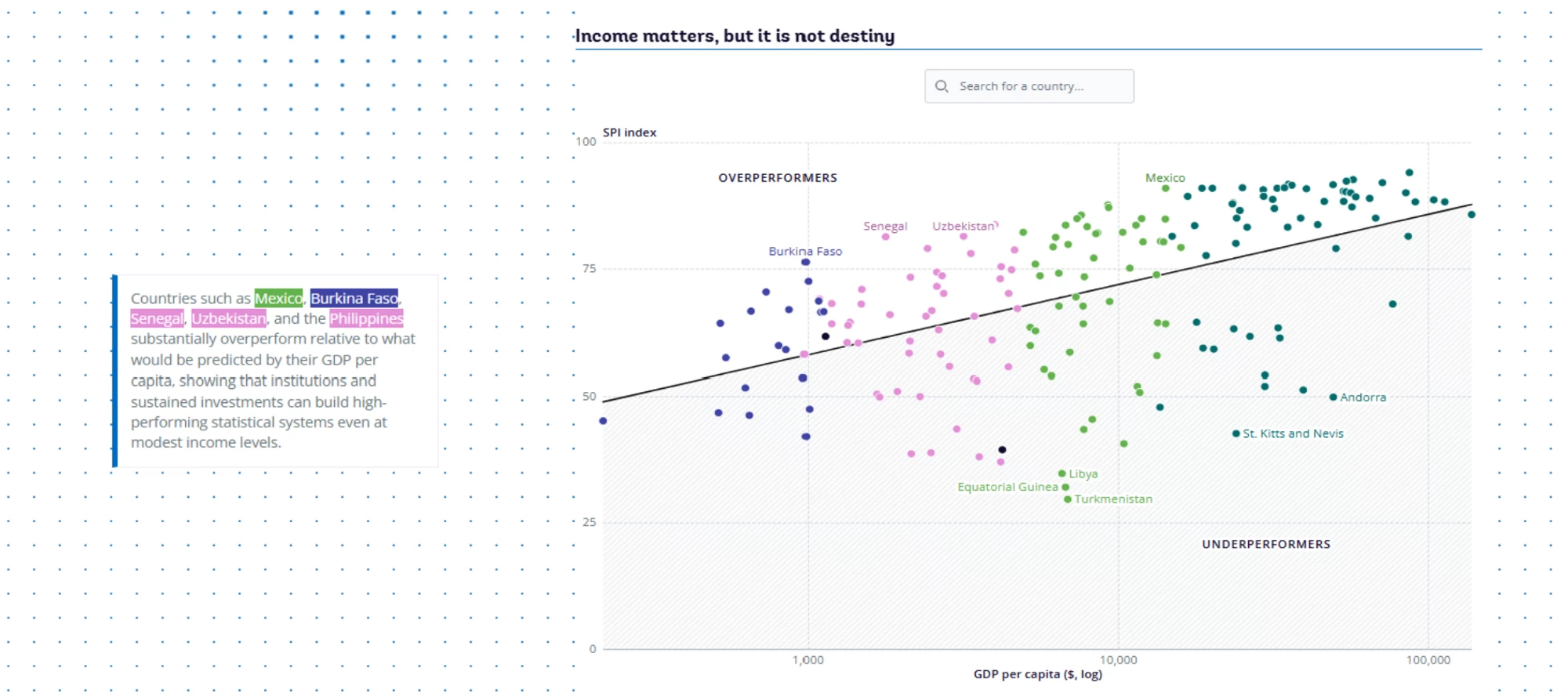
Income matters, but it is not destiny
Strong data systems are possible at all income levels. Mexico has a statistical system that rivals economies with twice its per capita GDP. Burkina Faso, Senegal, Uzbekistan, and the Philippines also stand out as overperformers for their levels of income. Institutions, incentives, and sustained investments matter too.
For a Minister of Finance, in the end, the quality of decisions depends on the quality of the data behind them.
Source : World Bank