

Recent military conflict in the Middle East have once again reminded the world how vulnerable modern economies remain to sudden disruptions in global oil supply. For many developing economies, particularly in South and Southeast Asia, the consequences of such disruptions are immediate and acute. Higher oil prices translate quickly into higher transportation costs, rising food prices, fiscal pressure from fuel subsidies, and deteriorating household welfare.
Macroeconomic evidence suggests that the impact can be substantial: the International Monetary Fund (IMF) estimates that a sustained 10 percent increase in global oil prices can reduce global economic growth by roughly 0.1–0.2 percentage points, while also pushing inflation higher. Countries that import much of their energy, oil shocks are therefore not just an energy issue, they quickly become a broader development challenge.
This recurring vulnerability raises an important question: how can countries reduce their exposure to global oil volatility while maintaining affordable mobility and economic stability?
Over the past decade, renewable energy technologies such as solar and wind have advanced noticeably and are now among the most cost-competitive sources of electricity worldwide. However, replacing liquid fuels used in transportation, particularly gasoline and diesel, remains far more difficult. Passenger vehicles, freight transport, and agricultural machinery still rely heavily on liquid fuels because they are energy-dense, easily transportable, and supported by existing infrastructure.
In this context, biofuels, particularly ethanol derived from agricultural crops, may offer an underappreciated pathway to reduce oil dependence in transport.
Oil insecurity and the development challenge
Many economies in South and Southeast Asia remain heavily dependent on imported petroleum products. World Bank energy statistics show that large emerging economies such as India import more than 85 percent of their crude oil needs, leaving their transport systems highly exposed to global oil price volatility. Countries such as Thailand, the Philippines, and Bangladesh also rely heavily on imported fuel to power their transport sectors.
When oil prices rise, the ripple effects extend to mobility, agricultural production, supply chains, household welfare, and beyond. Governments often face difficult fiscal choices between increasing subsidies to cushion consumers or allowing higher fuel prices to pass through to households and businesses. In lower-income countries, these shocks can erode real incomes and push vulnerable populations deeper into poverty.
Recent military conflict in the Middle East have highlighted how fragile global supply chains remain. The Strait of Hormuz, a narrow shipping corridor through which roughly one-fifth of the world’s oil supply passes, continues to represent a critical chokepoint. Any disruption in this region can send shockwaves through global energy markets within days.
Reducing exposure to such shocks requires diversification of energy sources. Electrification through renewable power will play a central role in the long-term energy transition. Yet the transition in transport is slower and more complex. Electric vehicles are expanding rapidly, but infrastructure, affordability, and grid readiness remain constraints across many developing economies.
This leaves an important space for liquid biofuels as a transitional strategy.
Lessons from Brazil’s ethanol revolution
No country illustrates the potential of agricultural biofuels better than Brazil, particularly for South and Southeast Asian countries and other developing economies with comparable agro-climatic conditions and energy security challenges.
Beginning in the 1970s, Brazil launched an ambitious program to reduce its dependence on imported oil by producing ethanol from sugarcane. Over time, the country built an integrated ecosystem linking agriculture, fuel processing, vehicle technology, and public policy.
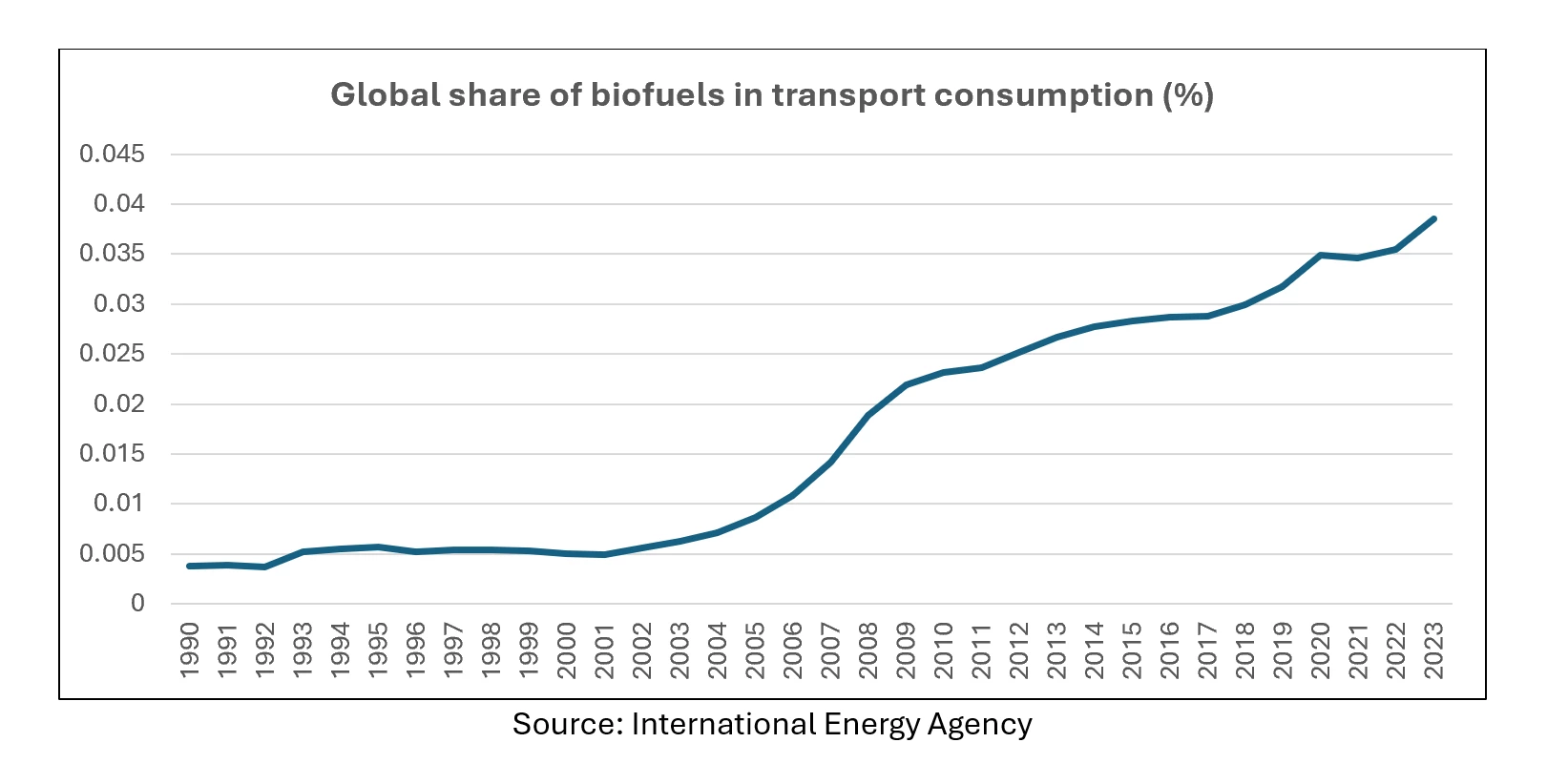
Today, Brazil’s transport sector operates on a flexible fuel system where gasoline is routinely blended with ethanol, and most vehicles can run on varying ethanol blends. Biofuels account for over a quarter of Brazil’s total transport energy consumption, an extraordinary achievement compared with most other economies.
Brazil’s success was not simply the result of producing sugarcane. It required a coordinated system including:
- Large-scale agricultural production of high-yield sugarcane
- Ethanol processing and distribution infrastructure
- Government blending mandates and fuel policies
- Widespread adoption of flex-fuel vehicles
This integrated approach transformed agriculture into a strategic energy asset. Sugarcane fields effectively became part of the country’s energy infrastructure.
Emerging efforts in South and Southeast Asia
Several countries in Asia are already exploring similar pathways.
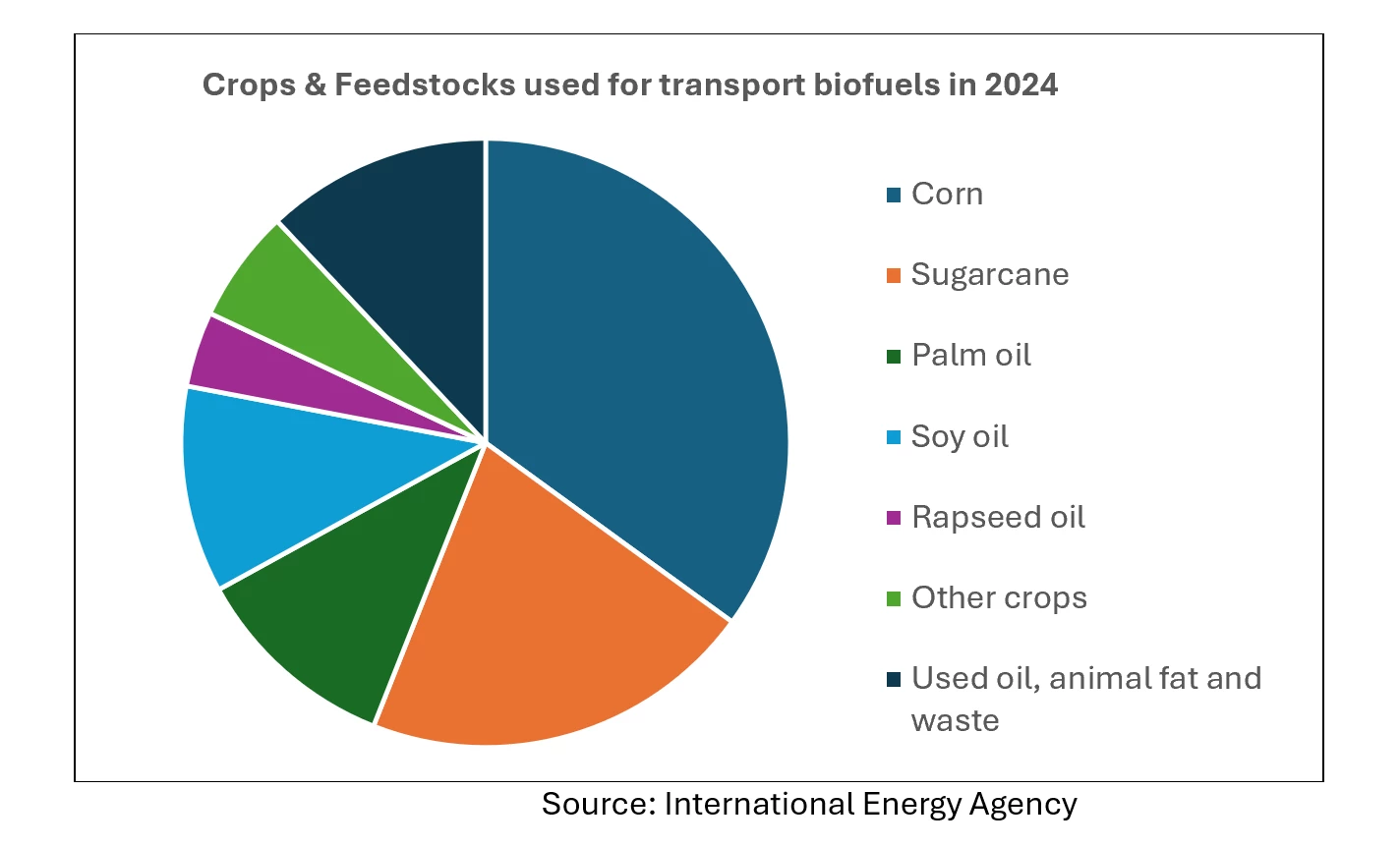
India, for example, has accelerated its ethanol blending program in recent years and has moved rapidly toward a national target of 20 percent ethanol blending (E20) in gasoline; as of 2025, India’s national average ethanol blending rate in petrol has reached approximately 18-19 percent. This effort aims to reduce oil imports, stabilize farm incomes, and diversify energy sources simultaneously. Ethanol production in India relies largely on sugarcane molasses and increasingly on other feedstocks such as maize.
Thailand offers another example. The country has developed a mature “gasohol” market with ethanol-blended fuels widely available across the country. Government policy has supported the development of ethanol refineries while encouraging the use of ethanol blends in vehicles. Other countries in the region, including Indonesia and the Philippines, are experimenting with biofuel mandates as part of broader energy diversification strategies.
However, replicating Brazil’s success is far from straightforward.
The limits and Trade-offs
Biofuels are not a universal solution to the world’s energy challenges. Several important constraints must be considered.
First, land and agricultural productivity matter. Brazil’s sugarcane yields are among the highest in the world, making ethanol production relatively efficient. Countries with lower yields or limited arable land may face significantly higher production costs.
Second, food security considerations cannot be ignored. Expanding biofuel production raises concerns about competition between food and fuel uses of agricultural commodities. Large-scale biofuel programs require land, water, and other inputs that might otherwise support food production. If poorly managed, land may shift away from staple crops toward feedstocks such as sugarcane or maize, tightening food supplies and raising prices especially in regions where arable land is limited and productivity remains uneven. These risks are particularly relevant in parts of South and Southeast Asia where population pressure on land is already high. Policymakers therefore face a delicate balance: promoting biofuels to enhance energy security and rural incomes while ensuring land-use decisions do not undermine food availability. Careful policy designs such as using molasses by-products, crop residues, or productivity gains can help mitigate these trade-offs, but the food-fuel link remains central to any large-scale biofuel strategy.
Third, policy and infrastructure systems must align. Ethanol markets require consistent blending mandates, compatible vehicle technologies, and distribution infrastructure. Without these systems in place, biofuel industries struggle to scale.
Beyond infrastructure, there is also a question of long-term positioning. Biofuels should be seen as complementary, not as a standalone solution. Solar and wind power will likely dominate the decarbonization of electricity systems. Ethanol and other biofuels may instead serve as a bridge solution for transport sectors that are harder to electrify quickly.
Agriculture as part of the energy transition
Despite these limitations, agricultural biofuels offer an important insight: farms can contribute not only to food security but also to energy security.
Countries that already cultivate sugarcane or other biofuel feedstocks at scale, ethanol production could reduce reliance on imported oil while creating new value chains in rural economies. Farmers gain additional markets for their crops, and governments gain a domestic source of transport fuel.
The lesson from Brazil is not that agriculture can replace fossil fuels entirely. Rather, it shows that strategically linking agriculture with energy policy can strengthen resilience against global oil shocks. In a world where no single technology will solve the energy transition alone, electrification, renewable power, efficiency improvements, and biofuels all have roles to play; diversification remains the most reliable hedge against uncertainty. As countries across South and Southeast Asia seek to build more secure and sustainable energy systems, ethanol derived from agricultural feedstocks may become an increasingly important piece of the puzzle.
In a world where oil insecurity continues to shape economic fortunes, the fields that feed populations might also help power their mobility.
Source : World Bank