


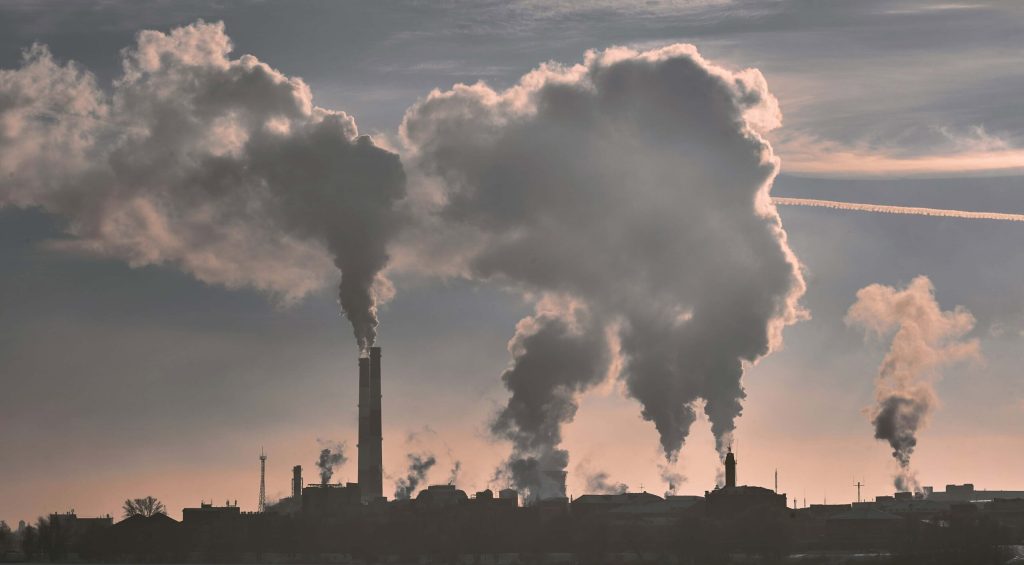
The adverse impacts of air pollution on human health are large and well-documented. Pollution is the single largest environmental threat to human health and generates significant excess mortality around the world. This is especially true in LMICs where pollution levels are highest and getting worse the fastest.
But air pollution has negative impacts that go beyond mortality and morbidity. Exposure to pollution on the job harms workers by reducing both labor productivity and labor supply are reduced by exposure to high levels of pollution. While this relationship has been established in the U.S, more recent work has shown these effects in LMICs as well.
Past work
Work from China, India, and Mexico show that pollution affects both how much people work and how productive they are while working. In Mexico City, for example, researchers find that workers reduce labor supply on high-pollution days, with hours worked falling by roughly 7.5 percent on days with extreme PM2.5 exposure. These responses appear to reflect a tradeoff between income and health: workers avoid exposure when pollution is especially severe, but poorer and more informal workers are less able to do so because missing work immediately reduces income.
Other work shows that pollution also reduces productivity on the job itself, even in indoor manufacturing environments. Using detailed worker-level production data from textile and garment factories in China and India, researchers find that workers produce less output when exposed to higher levels of particulate pollution. Evidence from China suggests that prolonged exposure to PM2.5 reduced factory worker productivity by roughly 1–3 percent, while evidence from Indian garment factories finds immediate declines in worker efficiency during pollution shocks. These effects are especially large for workers performing more complex tasks.
There remain some contradictions however. The work from China finds little evidence for reductions in labor supply, in contrast to the evidence from Mexico. Meanwhile, the Indian evidence suggests that effects are immediate – productivity declines in the same day as pollution spikes – while the evidence from China again differs, finding that impacts occur only after sustained exposure.
More recent experimental evidence from Bangladesh does not resolve these puzzles but does provide more evidence in favor of pollution having large productivity impacts. In an RCT in small textile workshops in Dhaka, researchers installed HEPA air purifiers in randomly selected factories and reduced indoor PM2.5 concentrations by roughly 37 percent. Workers in treated firms produced approximately 27 percent more output than workers in control firms, despite pollution levels remaining well above WHO guidelines.
Why this matters
Accurately quantifying the damages that air pollution imposes on workers matters for reasons that go beyond just wanting to have an accurate and comprehensive accounting of the scope of the externality that air pollution generates. Historically much of the regulatory action on air pollution has been motivated by reducing health impacts. That is because these are well understood with large welfare impacts (though the exact amount depends on how they are monetized).
In important ways, however, the health impacts are limited. They are limited in who is most impacted – air pollution generates the largest health effects among the very young and the very old – and in their scope – health effects do not always generate large fiscal externalities for governments.
Impacts on workers, particularly impacts on labor productivity and labor supply, do not share these limitations. They are, mechanically, concentrated among the working age population, which is the largest population segment in many LMICs. These impacts, by reducing economic output, can also generate meaningful fiscal externalities for governments. Reducing these impacts has positive impacts not only for the workers who are directly affected but, indirectly, for the wider economy as well.
Because of the size of the working age population in many places, and the spillover effects of improved productivity for the entire economy, the impacts of pollution on workers might be large in aggregate. This could be true despite relatively small individual impacts. It may be especially true in places with very high levels of pollution.
Next steps
There are still many important questions that we cannot yet answer. How to best adapt to high levels of exposure in the short run? While the long run policy implications are clear – reducing overall pollution concentrations – it will take time to achieve these long run outcomes. How should workers and firms protect themselves in the meantime?
The evidence from India suggests that high quality managers can reallocate tasks among workers in ways that reduce the impacts of pollution, without changing the overall level of exposure. Improving managerial quality is thus one (surprising) option to reduce the impacts of pollution. The results of the Bangladesh RCT also indicate that air purifiers can effectively increase productivity by reducing worker exposure, even if they do not eliminate exposure. These results raise a new question: why do firms display a low willingness to pay for purifiers despite their effectiveness?
An additional open question is the magnitude of the damages caused by a lifetime of exposure to pollution in the workplace. Studies of the short-term impacts of air pollution typically show small impacts of pollution spikes. The accumulation of individually small harms of exposure episodes across working career over the course of a lifetime could aggregate to large overall impacts as well.
I was excited to hear about a new paper recently presented at a workshop that uses a unique long-run panel of lifetime exposure to pollution among French workers over more than 70 years. They couple that with the phase-out of fossil fuel generation to show that higher lifetime exposure to air pollution can reduce total lifetime earnings by nearly 5%.
While certainly not the last word on the total lifetime damages of workplace exposure to pollution, this paper suggests that those damages may be sizeable. More importantly, the paper highlights what I think is an important future avenue for work in this space. The data requirements to analyze the consequences of long-term exposure to pollution are immense and make this kind of research difficult. Since ambient pollution levels have been high in much of the world for many years and will remain high for years to come, despite efforts to lower them, mobilizing datasets that track individuals over the long-term in order to understand how persistent exposure to these levels impacts labor productivity and wages is a very promising direction for future research.
Source : World Bank