


Creating Jobs Through a Business Plan Competition: Does it matter how entrepreneurs are selected and how much funding they are given?

Of the estimated 244 million firms in Africa, 232 million (95%) are own-account businesses consisting of only the owner, and a further 7.7 million (3.1%) have
Technology adoption and labour shortages: Evidence from Britain’s Industrial Revolution

As populations in rich countries age and fewer youngsters enter the labour force, employers and politicians bemoan labour ‘shortages’. This column turns to historical evidence
The nitrogen paradox: Every sweet hath its sour

When the philosopher and poet Ralph Waldo Emerson wrote in 1841, “Every sweet hath its sour; every evil its good”, nitrogen was surely the last
Tariff reciprocity and the True Cost of Protection Index

Effective tariff index comparisons are spotlighted in media reports on trade wars and trade talks. This column argues that the effective tariff index is inadequate
Jordan: GDP grows 2.8% in Q3 2025 — DoS

Manufacturing accounted for the largest share at 17.7 per cent, followed by real estate activities at 11.7 per cent Jordan’s gross domestic product (GDP) at
Following the tracks: How digital monitoring expands access to mechanization in agriculture.
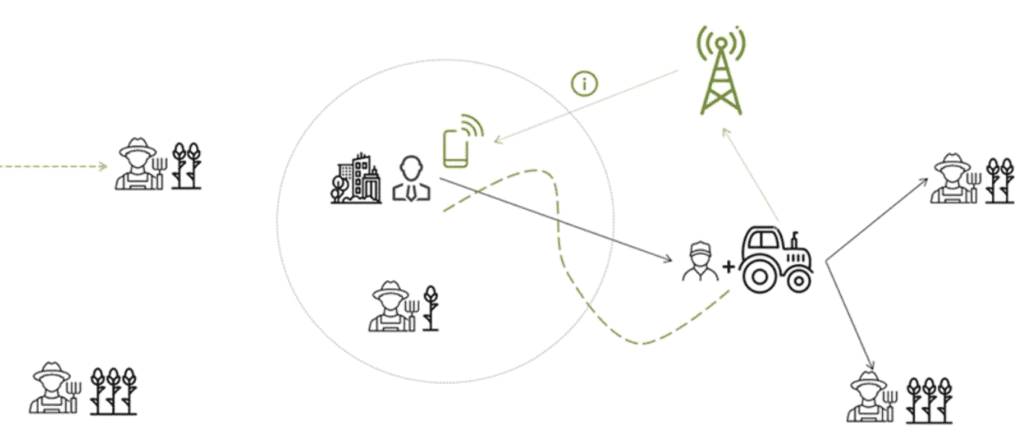
Low agricultural productivity in developing countries is often linked to limited mechanization. Using tractors for land preparation can significantly increase farm productivity, but most farmers
How can data from space shape the future of agriculture?

Have you ever wondered how satellites orbiting thousands of kilometers above Earth can help farmers on the ground grow more food? From mapping land use
The economic value nations create for others relative to domestic gains

True economic power lies not only in what a country gains from trade, but also in how much it contributes to the prosperity of others.
From space to strategy: using satellite data to drive low-emission development

Closing the data gap for low-emission development A low-emission growth path across key sectors — including agriculture, mining, forestry, manufacturing, infrastructure, and utilities — is
Local problems, local solutions: The need for advanced skills and R&D in the developing world

Education is part of the enabling infrastructure required for jobs, social development, and future economic growth. Unfortunately, low- and middle-income countries face an urgent skills